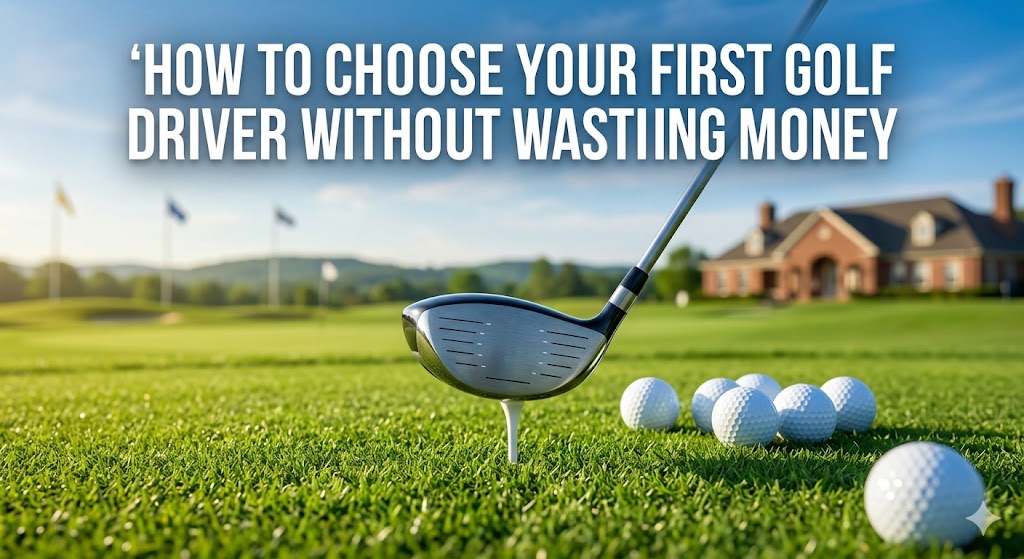
Most beginner golfers lose strokes before the ball even leaves the tee box—and many waste hundreds of dollars buying the wrong driver because they believe expensive clubs automatically fix bad shots. The truth is simpler: the best beginner golf equipment is equipment that matches your swing speed, forgiveness needs, and skill level, not what professionals use on TV.
Buying your first driver can feel overwhelming. Walk into any golf store and you’ll see adjustable hosels, carbon faces, draw-bias technology, launch monitors, and price tags pushing beyond $600. New golfers often buy clubs designed for low-handicap players, only to struggle with slices, inconsistent contact, and frustration. This golf driver buying guide explains exactly how beginners can choose the right driver without overspending.
A golf driver is the longest club in the bag and is designed to maximize distance off the tee. For beginners, the ideal driver focuses on forgiveness, launch assistance, and consistency rather than advanced shot shaping or tour-level customization.
According to industry data from the National Golf Foundation, millions of new golfers entered the sport in recent years, increasing demand for beginner-friendly golf gear. Manufacturers such as Callaway, TaylorMade, Ping, Cobra, and Wilson now build drivers specifically designed for slower swing speeds and off-center hits.

What Should Beginners Look for in a Golf Driver?
Beginners should prioritize forgiveness, loft, shaft flexibility, and affordability when choosing a golf driver.
The biggest mistake first-time golfers make is focusing only on distance. A driver that goes farther but constantly slices into the rough will hurt your scores more than a slightly shorter but straighter club.
Here are the most important features beginners should evaluate:
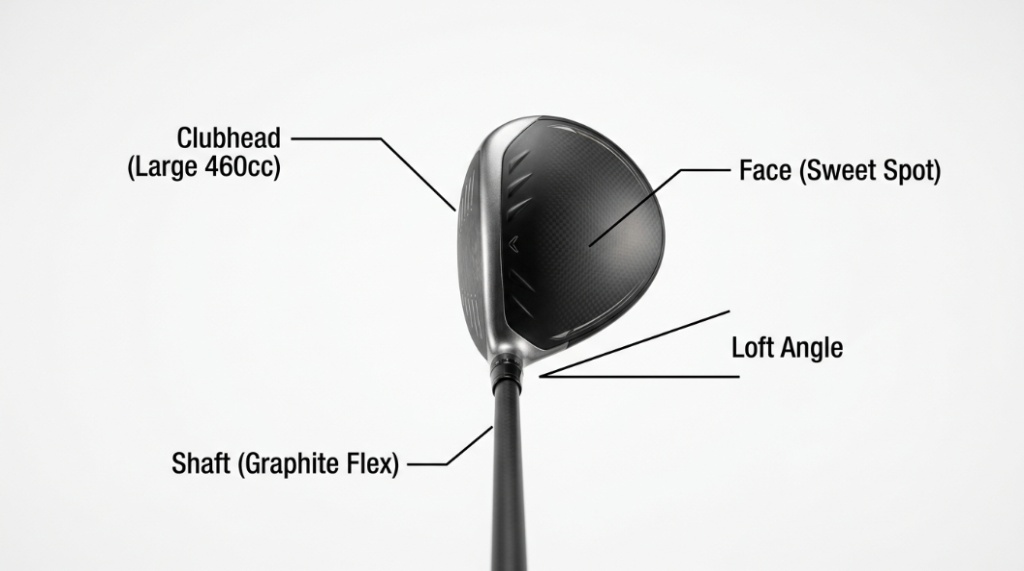
- Large sweet spot for forgiveness
- Higher loft for easier launch
- Lightweight construction for swing speed
- Flexible shaft for improved ball flight
- Adjustability for long-term use
- Reasonable price instead of premium tour pricing
Modern beginner drivers use perimeter weighting and larger clubheads to reduce the punishment from off-center strikes. This technology helps golfers keep more drives in play while building confidence.
Why Is Forgiveness More Important Than Distance for Beginners?
Forgiveness matters more because beginner golfers rarely hit the center of the clubface consistently.
Many new players think a lower-spin “players driver” will add distance. In reality, those clubs are designed for golfers with high swing speed and precise ball striking.
Forgiving drivers improve:
- Launch consistency
- Ball speed retention
- Slice reduction
- Accuracy on mishits
- Confidence at address
A forgiving driver can turn a severe slice into a manageable fade. That difference alone can save multiple strokes per round.
Golf manufacturers use technologies like:
- MOI (Moment of Inertia)
- Draw-bias weighting
- Carbon composite crowns
- AI-designed clubfaces
- Variable face thickness
These features stabilize the clubhead through impact and help maintain straighter ball flight.
What Loft Is Best for a Beginner Golf Driver?
Most beginners should choose a driver with 10.5° to 12° of loft because it helps launch the ball higher and straighter.
Higher loft creates more carry distance for slower swing speeds. Many beginners incorrectly buy 8° or 9° drivers because professionals use them.
Tour players generate high clubhead speed and naturally create launch. Beginners usually need extra loft assistance.
| Player Type | Recommended Loft | Why It Helps |
|---|---|---|
| Slow swing speed beginners | 11.5°–12° | Higher launch and more carry |
| Average beginners | 10.5° | Balanced launch and forgiveness |
| Athletic fast swingers | 9.5°–10.5° | Controls excessive spin |
Many modern drivers also include adjustable loft sleeves. This allows beginners to experiment later without buying a new club.
What Shaft Flex Should a Beginner Use?
Most beginners benefit from regular or senior-flex graphite shafts because they help generate more clubhead speed and launch.
The shaft affects timing, feel, and ball flight more than many golfers realize.
General shaft recommendations:
- Senior flex: slower swing speeds
- Regular flex: average beginner golfers
- Stiff flex: stronger or athletic players
- Extra stiff: advanced high-speed golfers
Using a shaft that is too stiff can lead to:
- Low ball flight
- Weak fades or slices
- Reduced carry distance
- Poor timing
Graphite shafts are standard in drivers because they are lightweight and easier to swing than steel.
Should Beginners Buy a New or Used Golf Driver?
Used golf drivers often provide the best value for beginners because technology improvements between model years are usually small.
A driver released two or three years ago may perform almost identically to the newest model while costing half as much.
For example:
- A new premium driver may cost $600
- A lightly used previous-generation model may cost $220–$300
- Performance differences are often minimal for beginners
Smart places to buy used golf clubs include:
- Certified pre-owned programs
- Golf retail trade-in sections
- Trusted online golf marketplaces
- Local golf shops
Look for:
- Minimal crown damage
- Clean clubface
- No shaft cracks
- Original grip condition
Many golfers upgrade frequently, which creates excellent value opportunities for beginners.
How Much Should You Spend on Your First Driver?
Most beginners should spend between $150 and $350 on their first golf driver.
Spending more rarely improves performance significantly for new golfers. Your swing mechanics matter more than premium materials.
Here’s a realistic beginner budget breakdown:
| Budget Range | What to Expect | Best For |
|---|---|---|
| $100–$150 | Older used drivers | Casual beginners |
| $150–$300 | Recent forgiving models | Most new golfers |
| $300–$450 | Current mid-tier drivers | Committed players |
| $500+ | Tour-level new releases | Usually unnecessary for beginners |
Many golf instructors recommend investing more money into lessons and practice instead of expensive clubs.
What Are the Best Beginner Driver Brands?
The best beginner golf driver brands focus on forgiveness, consistency, and value rather than tour-only performance.
Several manufacturers consistently produce beginner-friendly drivers.
Callaway
Callaway drivers are known for forgiveness and easy launch characteristics. Models like the Rogue and Big Bertha series are beginner-friendly.
TaylorMade
TaylorMade drivers often feature strong adjustability and ball speed technology. SIM and Stealth models remain popular among new golfers.
Ping
Ping is highly respected for forgiveness and stability. Their G-series drivers are frequently recommended by club fitters.
Cobra
Cobra offers lightweight designs and competitive pricing. Air-X drivers specifically target slower swing speeds.
Wilson
Wilson provides affordable beginner golf equipment without overwhelming players with advanced features.
Is Driver Adjustability Important for Beginners?
Adjustability can help beginners grow into a driver, but it should not be the main buying factor.
Many modern drivers include adjustable:
- Loft settings
- Lie angles
- Weight positioning
- Face bias
These settings can help reduce slices or optimize launch conditions later as your swing improves.
However, beginners should avoid constantly changing settings. Too many adjustments can create confusion and inconsistency.
A properly fitted standard setup is usually enough for most new golfers.
Should Beginners Get Fitted for a Driver?
A basic driver fitting can help beginners avoid expensive mistakes, especially if they have unusual swing characteristics.
You do not need a tour-level fitting session costing hundreds of dollars. Even a simple launch monitor session at a golf retailer can provide useful insights.
A fitting can measure:
- Clubhead speed
- Launch angle
- Spin rate
- Carry distance
- Shot dispersion
This information helps determine:
- Correct loft
- Proper shaft flex
- Ideal club length
- Suitable head design
Many beginners discover their current driver is too stiff, too low lofted, or too difficult to control.
What Driver Mistakes Do Beginners Commonly Make?
Most beginners buy drivers based on marketing hype instead of fit and forgiveness.
Here are the biggest mistakes to avoid:
Buying What Professionals Use
Tour professionals swing much faster and strike the ball more consistently than average golfers.
Choosing Too Little Loft
Low-loft drivers reduce forgiveness and launch for slower swing speeds.
Ignoring Shaft Flex
The wrong shaft can dramatically affect consistency and ball flight.
Overspending Too Early
A $650 driver will not automatically fix slicing or poor mechanics.
Skipping Testing
Even a few test swings can reveal major comfort differences between models.
Can a Driver Help Fix a Slice?
Some beginner drivers can reduce slicing tendencies through draw-bias weighting and forgiving face design.
A slice occurs when the clubface is open relative to the swing path at impact.
While technique matters most, certain driver designs can help minimize side spin.
Features that help reduce slices include:
- Offset designs
- Heel weighting
- Draw-bias settings
- Higher loft
- Lighter shafts
However, no driver completely fixes swing flaws. Lessons and practice remain essential.
What Driver Length Is Best for Beginners?
Many beginners benefit from slightly shorter drivers because they improve control and center-face contact.
Modern drivers often exceed 45 inches in length to advertise more distance. But longer clubs are harder to control.
Many recreational golfers perform better with drivers around:
- 44.5 inches
- 45 inches
Shorter drivers often improve:
- Accuracy
- Consistency
- Smash factor
- Confidence
Better contact frequently produces more usable distance than wild swings with longer clubs.
How Can Beginners Test a Driver Before Buying?
Beginners should test drivers based on comfort, forgiveness, and consistency instead of maximum distance alone.
When testing:
- Hit multiple shots
- Ignore your single longest drive
- Focus on average results
- Check launch height
- Evaluate directional consistency
- Notice sound and feel
Questions to ask yourself:
- Does the club inspire confidence?
- Can you consistently get the ball airborne?
- Are mishits still playable?
- Does the shaft feel smooth?
The best driver for beginners is usually the one producing the tightest shot pattern—not necessarily the longest single shot.
What Is the Best Overall Strategy for Buying Your First Driver?
The smartest strategy is to buy a forgiving, moderately priced driver that matches your swing speed and skill level.
Focus on practical performance instead of marketing claims.
Here’s a simple beginner buying formula:
- Choose forgiveness first
- Select 10.5°–12° loft
- Use regular-flex graphite shafts
- Test before buying
- Consider used drivers
- Avoid overspending
- Invest in lessons alongside equipment
Golf becomes much more enjoyable when your driver helps keep the ball in play instead of constantly searching the rough.
Conclusion
Choosing your first golf driver does not need to be expensive or complicated. Most beginners improve faster with forgiving, properly fitted clubs rather than premium tour-level equipment. The right driver should help you launch the ball easily, reduce mishits, and build confidence from the tee box.
The biggest takeaway from this golf driver buying guide is simple: prioritize forgiveness, loft, shaft flexibility, and value. A reliable used driver from a trusted brand often outperforms an overpriced new club that does not fit your swing.
Golf equipment marketing can make beginners believe they need the newest technology to improve. In reality, consistency and comfort matter far more. Spend wisely, test clubs whenever possible, and focus on building solid fundamentals.
If you are starting your golf journey, use this guide as your checklist before buying. A smart equipment decision today can save money, lower frustration, and make the game far more enjoyable long term.
FAQ: Beginner Golf Driver Buying Questions
What is the best loft for a beginner golf driver?
The best loft for most beginners is between 10.5° and 12° because higher loft helps create easier launch, more carry distance, and improved forgiveness.
Should beginners buy expensive golf drivers?
No. Most beginners do not benefit enough from premium drivers to justify spending $500–$700. A forgiving used driver often delivers excellent performance at a lower price.
How long does a golf driver last?
A quality golf driver can last many years if properly maintained. Most recreational golfers replace drivers because of technology updates rather than actual wear.
Is a draw-bias driver good for beginners?
Yes. Draw-bias drivers help reduce slices by encouraging a straighter ball flight, making them useful for many new golfers.
Can beginners use stiff shafts?
Most beginners should avoid stiff shafts unless they naturally generate high swing speed. Regular-flex shafts usually provide better launch and feel.
Do beginners need adjustable drivers?
Adjustability can help long term, but beginners should focus more on forgiveness and fit than advanced adjustment settings.
What is the easiest golf driver to hit?
Drivers with high MOI, larger clubheads, lightweight construction, and higher loft are generally the easiest for beginners to hit consistently.
📌 Related Reads
Discover: How to Choose the Best Fishing Life Jacket That Could Save Your Life (2026 Guide)
Learn: How to Fix Sweaty Hands in Golf (Best Glove Solutions)