It is 3 a.m., and you are settling into the same awkward spot on the couch for the fourth time tonight. Your neck aches, the baby is squirming, and the remote is just out of reach. A dedicated breastfeeding station solves this by grouping everything you need—support, hydration, and supplies—into one functional space. Many parents find that a quality support pillow is the foundation of that setup; you can visit website to see how the right cushion shapes the experience. Here is how to build a station that actually works for you.
Quick Answer
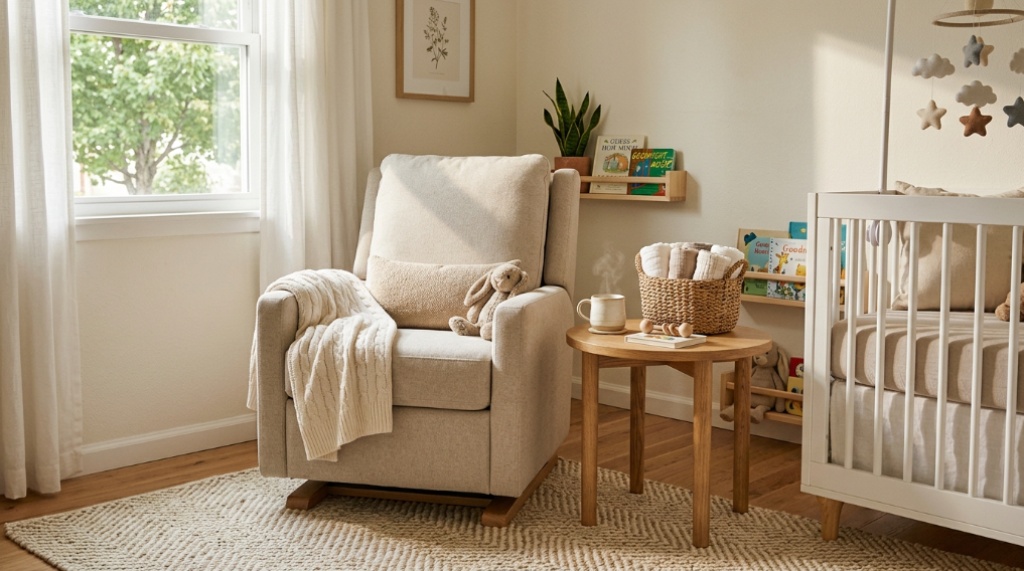
Create a comfortable breastfeeding station by choosing a supportive chair with armrests, adding a firm nursing pillow to bring the baby to breast level, and placing a side table within arm’s reach for water, snacks, burp cloths, and a phone charger. Keep the setup in a room where you already spend time, and duplicate the essentials in a second location if you have a multi-story home.
Key Takeaways
- Positioning matters more than furniture: a pillow that raises the baby to your breast prevents neck, shoulder, and back strain.
- Keep a “one-arm reach” rule for your side table—if you cannot grab it without standing, it is too far away.
- Set up at least one station on each floor you use regularly to avoid unnecessary trips during cluster feeds.
- Hydration and snacks are not luxuries; breastfeeding burns calories and triggers thirst, so treat them as essential supplies.
- Adjust the station as your baby grows—what works for a newborn often needs tweaking by the time they are three months old.
Start With the Chair and Your Posture
The single biggest mistake is choosing a chair based on looks rather than support. A glider or rocking chair with a high back and padded armrests gives you a stable base, but the key detail is seat depth. If the seat is too deep, you will slide forward and round your shoulders to compensate. If it is too shallow, your legs take the strain.
Your feet should rest flat on the floor or on a small stool. This keeps your hips level and reduces lower back tension. Armrests should be high enough that your elbows rest at roughly a 90-degree angle when you hold the baby—if they are too low, your shoulders creep upward within minutes.
If you already own a chair that is not ideal, you can often fix it with a lumbar cushion and a footstool rather than buying new furniture. Test the setup for a full feeding before deciding it works.
Why a Nursing Pillow Changes Everything
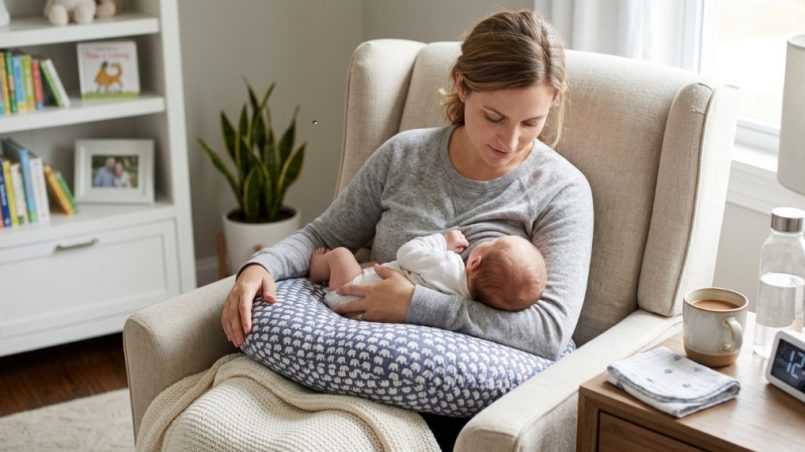
A nursing pillow is not just a cushion—it is a positioning tool. Its job is to bring the baby up to your breast instead of you leaning down to the baby. That difference determines whether you finish a feeding with relaxed shoulders or a knot between your shoulder blades.
Look for a pillow that holds its shape rather than flattening under the baby’s weight. Firmness matters because a pillow that compresses too much defeats the purpose. Many parents also use the same pillow for tummy time and supported sitting later, which extends its useful life well beyond the newborn stage.
Place the pillow so it sits snugly around your waist, then bring the baby to the pillow rather than pushing the pillow under the baby. If you have a C-section recovery, a pillow that rests above the incision line without pressing on it makes a noticeable difference in comfort.
Build a Side Table That Works With One Hand
During a feeding, you typically have one free hand at best. Everything you need should be reachable without twisting, stretching, or standing up. A small table or a rolling cart placed at your dominant side works well.
Here is what earns a spot on the table:
- A large water bottle with a straw or a spill-resistant lid
- One-handed snacks such as nuts, granola bars, or fruit
- Burp cloths within easy grab range
- Phone and a charging cable
- Lip balm and hand lotion, since feeding sessions dry out skin
- A small notebook or app shortcut for tracking feeds if you choose to track
- Any prescribed nipple cream or breast pads
Avoid stacking the table so full that you cannot find anything. Rotate supplies weekly rather than letting clutter build up, To keep your nursery running smoothly and effortlessly handle cleanup after late-night feedings, make sure to Pick the Best Bottle Washer for NYC Apartments.
Lighting, Temperature, and Noise
Night feeds are the real test of a station. A dim, warm-toned lamp or a small clip light lets you see the latch without waking you fully. Harsh overhead lighting at 2 a.m. makes it harder to fall back asleep afterward.
Keep a light blanket or wearable blanket nearby. Body temperature often drops during feeding, especially at night, and reaching for a blanket across the room defeats the purpose of a self-contained station. If you live in a noisy area, a white noise machine or a fan can mask background sound without being loud enough to disturb the baby.
Setting Up Multiple Stations Without Overspending
You do not need a fully stocked station in every room. A practical approach is one primary station where you spend most of your day and one minimalist backup station elsewhere.
| Station Type | Best Location | What to Include |
|---|---|---|
| Primary | Living room or nursery | Chair, nursing pillow, side table, full supply of water, snacks, cloths, charger |
| Secondary | Bedroom or upstairs landing | Chair or bed pillow setup, water bottle, burp cloth, phone charger |
| Emergency | Car or diaper bag | Compact pillow or rolled towel, water, one burp cloth, breast pads |
The secondary and emergency setups prevent the frustration of walking downstairs mid-feed just to grab a burp cloth.
Common Mistakes That Make a Station Uncomfortable
Even well-intentioned setups run into the same problems. Watch for these:
- Buying the pillow last. The pillow is the positioning tool, not an accessory. Choose it before you finalize the chair.
- Placing the table behind you. If you have to turn your torso to reach it, you will strain your back within a week.
- Ignoring the footrest. A footstool is one of the cheapest upgrades with the largest impact on lower back comfort.
- Letting supplies run out. Refill the water and snack supply after every feeding, not when you notice it is empty at midnight.
- Never adjusting. What fits a newborn changes as the baby gains weight and length. Recheck your setup monthly.
Adjusting the Station as Your Baby Grows
A setup that works beautifully at two weeks may feel awkward at four months. As the baby gets heavier and longer, you may need a firmer pillow, a higher chair cushion, or a different feeding position entirely. Side-lying in bed often becomes more practical for night feeds once the baby has more head control.
If you return to work and pump during the day, keep a small pump kit near the station so you are not assembling parts from scratch each time. A station that adapts to pumping, bottle feeding, and nursing gets far more use than one built for a single purpose.
Frequently Asked Questions
Do I really need a nursing pillow, or can I use regular pillows?
Regular bed pillows can work in a pinch, but they tend to shift and flatten, which means you compensate with your posture. A firmer nursing pillow holds its shape and keeps the baby at a consistent height, reducing strain over repeated feedings.
Where is the best place to set up a breastfeeding station?
Choose the room where you already spend the most waking hours—usually the living room or nursery. A station in a room you rarely use will go unused. Add a smaller backup station near your bed for night feeds.
What should I keep on the side table?
Water, one-handed snacks, burp cloths, your phone and charger, nipple cream, and breast pads. Keep it minimal enough that you can find things without looking away from the baby.
How do I make night feeds less disruptive?
Use dim, warm lighting, keep the station fully stocked before bed, and avoid bright screens. A white noise machine can also help both you and the baby settle back down more easily.
Can I set up a station if I have a small apartment?
Yes. A rolling cart or a small side table beside your existing couch or bed is enough. The goal is reachability, not square footage—you can build a fully functional station in about two feet of space.
Conclusion
A comfortable breastfeeding station comes down to three things: proper positioning, reachable supplies, and a setup that adapts as your baby grows. Start with a supportive chair and a firm nursing pillow, then build the side table around what you actually use rather than what looks complete. If you set up one primary station and one backup, you will spend far less time walking and far more time resting. Adjust monthly, and the station will keep working long after the newborn stage ends.