Portland homeowners often rely on old garden hoes to manage weeds, loosen soil, and maintain backyard vegetable beds throughout the rainy and dry seasons. However, many people damage these tools because they sharpen them the wrong way. According to the National Gardening Association, more than 35% of home gardeners use hand tools that are over five years old. In addition, poorly maintained garden tools can reduce gardening efficiency by nearly 25%. Many Portland gardeners search for the best file for sharpening garden hoe because proper sharpening extends tool life and improves cutting performance in wet Northwest soil.
Why Sharpening Old Hoes Matters in Portland
Portland’s climate creates unique challenges for backyard gardening tools. Heavy rain during much of the year encourages rust and corrosion on metal surfaces. At the same time, compact soil in summer can quickly dull an old hoe blade. Therefore, gardeners must sharpen hoes correctly to keep them useful and safe.
Many people believe a dull hoe only slows work down. However, a dull blade also forces extra pressure during use and increases the chance of slipping. As a result, gardeners can accidentally damage plants or strain their wrists and shoulders. Proper maintenance helps prevent these common problems.
Older hoes often have stronger steel than some modern budget tools. Nevertheless, years of neglect can weaken the blade edge or create uneven wear. Portland homeowners who restore these tools carefully can still get years of reliable performance. Consistent sharpening also helps maintain smooth gardening routines.
Using the Wrong Sharpening Angle
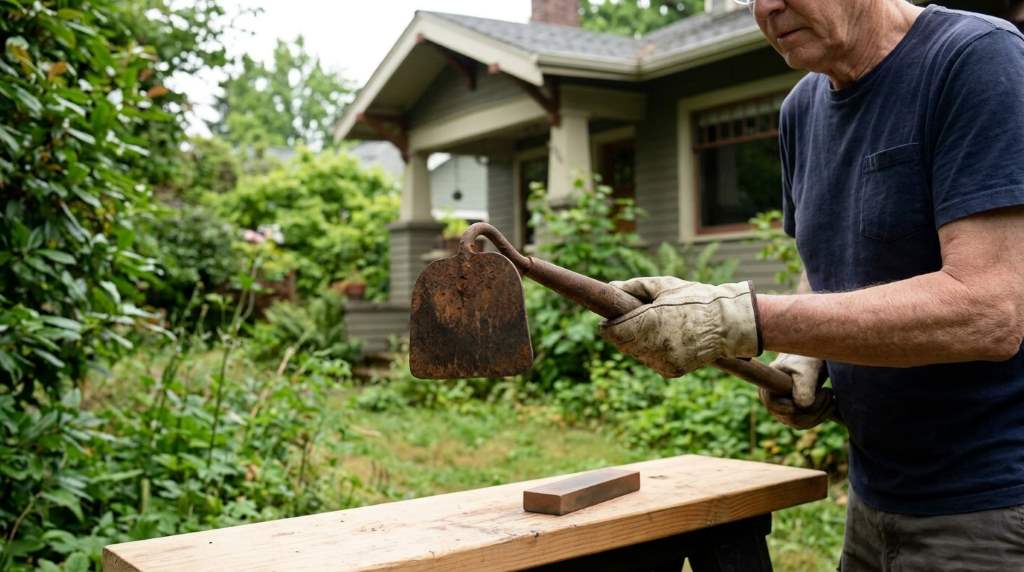
One of the most common mistakes involves sharpening the blade at the wrong angle. Many gardeners grind the edge too sharply because they want a knife-like finish. However, a garden hoe does not require a razor edge to cut through weeds and soil effectively. Excessively thin edges wear out quickly in rocky Portland soil.
A hoe blade usually works best with a moderate bevel angle. Most experienced gardeners maintain an angle between 30 and 45 degrees for balanced durability. This approach creates a strong edge that handles wet clay and compact dirt better. Furthermore, it reduces the need for constant re-sharpening.
People often sharpen inconsistently across the blade surface. Consequently, the hoe cuts unevenly and becomes difficult to control. Uneven edges also place stress on the metal during use. Taking slow, even strokes helps maintain a consistent edge shape.
Using visual guides can improve sharpening accuracy significantly. For example, some gardeners mark the bevel edge with a permanent marker before filing. This simple technique shows whether the file removes metal evenly. As a result, beginners can avoid damaging valuable old tools.
Ignoring Rust Before Sharpening
Rust removal is essential before sharpening any old hoe. Unfortunately, many backyard gardeners skip this step because they focus only on the cutting edge. Rust weakens the metal and interferes with smooth sharpening strokes. Therefore, sharpening over rust often produces rough and uneven results.
Portland’s damp weather makes rust especially common in garages and sheds. Even covered tools can collect moisture during winter months. Consequently, rust often forms near the blade edge and socket connection. Cleaning the metal thoroughly improves both safety and performance.
A wire brush or coarse sandpaper usually removes surface rust effectively. For heavier corrosion, gardeners can soak the blade in vinegar before scrubbing. This method loosens oxidation without damaging the steel unnecessarily. After cleaning, drying the blade completely is important.
Many gardeners forget to apply protective oil after removing rust. As a result, moisture quickly returns to the exposed metal surface. A light coat of machine oil or linseed oil helps preserve the blade. This step also reduces future sharpening work.
Overusing Power Grinders
Power grinders can sharpen hoes quickly, but many people misuse them. High-speed grinding generates heat that weakens the blade temper. Consequently, the metal becomes softer and loses durability over time. Old hoes are especially vulnerable because aging steel may already contain stress points.
Many Portland gardeners press too hard against the grinder wheel. This mistake removes excessive metal and shortens the life of the tool. Additionally, overheating may create blue discoloration along the edge. Once this happens, the blade often loses strength permanently.
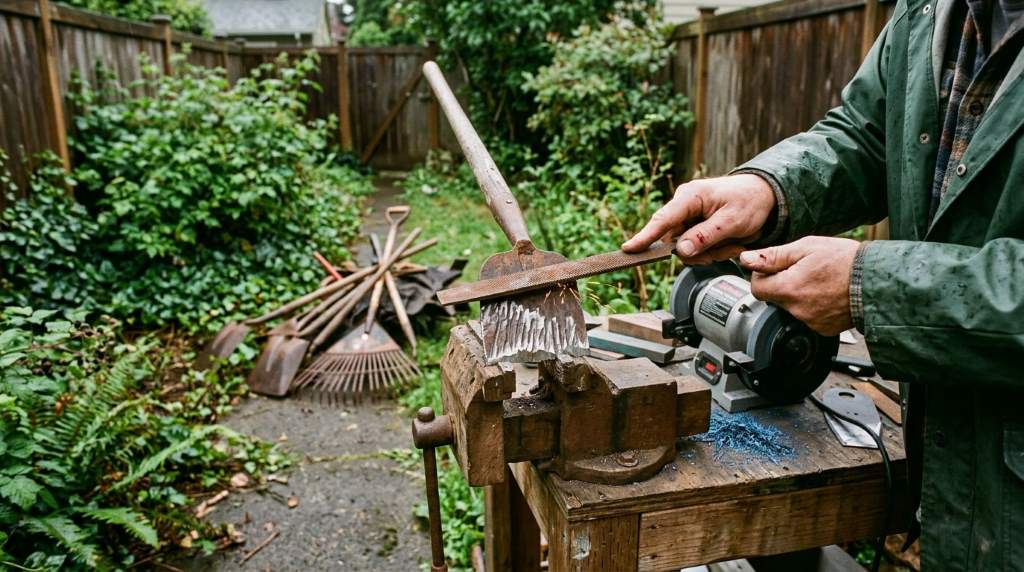
Hand files usually provide better control for backyard maintenance. They remove metal gradually and help preserve the original blade shape. Furthermore, hand filing reduces the risk of accidental gouges or uneven surfaces. Most experienced gardeners prefer this slower but safer method.
If using a grinder, short passes help minimize heat buildup. Dipping the blade in water after each pass also protects the steel temper. Moreover, keeping steady movement across the edge prevents deep grinding marks. Patience always produces better long-term results.
Choosing the Wrong File Type
Many gardeners buy the wrong sharpening file for old hoes. Fine files may polish the edge, but they remove metal too slowly on thick blades. On the other hand, extremely coarse files can leave rough edges that wear unevenly. Therefore, selecting the correct file matters greatly.
Mill bastard files are popular for sharpening garden hoes because they balance cutting speed and smoothness. These files work especially well for older steel tools used in Portland backyards. Additionally, they provide enough control for beginners. Consistent strokes create a cleaner edge with less effort.
Some people use damaged or clogged files without realizing the problem. Dirty teeth reduce efficiency and create uneven sharpening patterns. Consequently, sharpening takes longer and often produces inconsistent edges. Cleaning the file regularly improves performance significantly.
Storage also affects file quality over time. Tossing files into toolboxes allows teeth to dull through contact with other tools. Instead, gardeners should store files separately in dry conditions. Proper care extends the life of sharpening equipment considerably.
Forgetting to Secure the Hoe Properly
Loose tools create major sharpening problems for beginners. Many people hold the hoe with one hand while filing with the other. However, unstable movement increases the risk of injury and uneven sharpening. Secure positioning always improves both precision and safety.
Using a bench vise provides the best stability during sharpening. The vise keeps the blade steady while allowing consistent filing angles. Furthermore, stable positioning reduces arm fatigue during longer maintenance sessions. Even small portable vises work well for backyard gardeners.
Some Portland homeowners sharpen tools directly on wet outdoor surfaces. Rain and moisture can make both tools and workspaces slippery. Consequently, accidental slips become more likely during filing. Choosing a dry and stable work area prevents unnecessary accidents.
Protective gloves and safety glasses also matter during sharpening. Tiny metal particles can fly from the blade unexpectedly. Therefore, eye protection should always remain part of the process. Simple precautions help avoid painful injuries.
Sharpening Both Sides Incorrectly
Many old hoes are designed with only one beveled edge. Unfortunately, some gardeners sharpen both sides equally like a knife blade. This mistake changes the cutting geometry and reduces efficiency in soil. The hoe may then skip or drag during use.
Traditional draw hoes usually perform best with one sharpened bevel side. The flat side should remain mostly smooth for stable cutting action. Moreover, maintaining the original blade design helps preserve control. Older tools often work best when restored rather than redesigned.
Scuffle hoes and stirrup hoes sometimes require different sharpening methods. Therefore, identifying the tool type before sharpening is important. Portland gardeners with inherited tools should examine the original blade shape carefully. Matching the original bevel improves performance greatly.
Checking manufacturer designs online can help when tool origins remain unclear. Many vintage garden tool styles still follow traditional sharpening patterns. Consequently, simple research can prevent costly sharpening mistakes. Restoring tools accurately often increases their lifespan.
Removing Too Much Metal
Over-sharpening remains a serious issue with older hoes. Some gardeners believe thinner edges always work better. However, aggressive filing weakens the blade and shortens tool life dramatically. Old steel cannot always tolerate repeated heavy grinding.
Each sharpening session should remove only minimal metal. The goal involves restoring the edge rather than reshaping the entire blade. Furthermore, preserving blade thickness helps withstand Portland’s compact summer soil conditions. Thin edges chip more easily against rocks and roots.
Frequent touch-up sharpening works better than occasional aggressive grinding. Light maintenance keeps the edge functional without excessive wear. Additionally, regular inspections help identify small problems before they worsen. Consistency always protects older tools more effectively.
Watching for cracks near the blade edge is also important. Older hoes sometimes develop stress fractures after years of use. Continuing to grind damaged areas can cause sudden blade failure. Replacing severely weakened tools prevents accidents.
Neglecting Handle Maintenance
Sharpening alone cannot restore a hoe completely. Many Portland gardeners ignore cracked or loose wooden handles during maintenance. However, damaged handles reduce control and increase injury risks during backyard work. A sharp blade attached to a weak handle becomes dangerous quickly.
Moisture often damages wooden handles in the Pacific Northwest climate. Rain and humidity can cause swelling, splitting, and rot over time. Therefore, inspecting the entire tool before sharpening is essential. Safe gardening depends on both blade and handle condition.
Sanding rough wooden handles improves comfort significantly. After sanding, applying linseed oil helps protect the wood from moisture. This treatment also extends the life of older handles. Proper handle care complements blade maintenance perfectly.
Loose metal sockets should also receive attention immediately. Tightening or replacing fasteners prevents wobbling during use. Furthermore, stable connections improve cutting efficiency and accuracy. Complete maintenance keeps old tools dependable for years.
Skipping Regular Cleaning After Sharpening
Many gardeners finish sharpening and immediately store the hoe away. Unfortunately, leftover metal filings and dirt can attract moisture quickly. Consequently, rust may begin forming again within days. Post-sharpening cleaning helps protect the restored edge.
Wiping the blade thoroughly removes debris and excess oil. Dry cloths work well for routine maintenance after filing sessions. Additionally, light lubrication creates a moisture barrier during storage. These simple habits greatly extend tool life.
Portland’s rainy climate makes proper storage especially important. Damp sheds and outdoor storage spaces accelerate corrosion rapidly. Therefore, hanging tools indoors often provides better protection. Good airflow also helps reduce trapped moisture around metal surfaces.
Creating a regular maintenance schedule keeps old hoes working efficiently. Seasonal inspections allow gardeners to catch problems early. Moreover, consistent care reduces the need for major restoration later. Preventive maintenance always saves time and money.
Best Practices for Portland Backyard Gardeners
Portland gardeners benefit from adapting maintenance routines to local conditions. Wet winters require stronger rust prevention strategies throughout the year. Meanwhile, dry summer soil may demand more frequent edge touch-ups. Understanding these seasonal patterns improves long-term tool performance.
Experienced backyard gardeners often follow a simple maintenance checklist:
- Clean soil from the hoe after every use
- Dry the blade completely before storage
- Inspect the edge monthly during gardening season
- Apply light oil before winter storage
- Sharpen lightly instead of grinding aggressively
Local soil conditions also influence sharpening frequency. Portland areas with rocky or clay-heavy soil dull blades faster than soft garden beds. Consequently, gardeners should monitor tool performance closely. Adjusting maintenance schedules based on soil type improves efficiency.
Community gardening groups in Portland often share restoration techniques for vintage tools. Learning from experienced gardeners helps beginners avoid costly mistakes. Furthermore, older tools often hold sentimental or practical value. Proper care preserves both usefulness and history.
Conclusion
Sharpening old hoes correctly helps Portland gardeners maintain efficient and safe backyard tools for many years. However, mistakes such as over-grinding, improper angles, and rust neglect can permanently damage valuable equipment. Careful sharpening techniques, regular maintenance, and proper storage all contribute to better gardening performance. Portland’s wet climate makes preventive care especially important throughout the year.
If you want your old garden tools to last longer and work better, start following proper sharpening practices today. Consistent maintenance will save money, improve gardening results, and keep your backyard projects running smoothly.
FAQs
How often should I sharpen an old garden hoe?
Most Portland gardeners should sharpen hoes lightly every few months during active gardening season.
Can I use a power grinder on vintage hoes?
Yes, but you should use short passes and avoid overheating the blade.
What causes old hoes to rust quickly in Portland?
Frequent rain and high humidity create ideal conditions for metal corrosion.
Should a garden hoe be razor sharp?
No, a moderate edge works better and lasts longer in soil conditions.
What is the safest way to sharpen a hoe?
Securing the hoe in a vise and using a hand file provides the safest method.
📌 Related Reads
Learn: Air Quality Concerns from Natural Oils in Los Angeles Apartments
Discover: How to Save Money with Low Cost Reef Aquarium Tools at Home
Explore: How to Improve Aquarium Oxygen Levels with the Right Air Pump