Keeping fish healthy requires more than just clean water and proper feeding. Oxygen plays a vital role in maintaining a thriving aquatic environment. Without adequate oxygen, fish become stressed, lethargic, and vulnerable to disease. Understanding how to maintain optimal fish tank oxygen levels can make the difference between a struggling aquarium and a vibrant underwater ecosystem.
Many aquarium owners overlook the importance of proper aeration. They assume that simply filling the tank with water provides everything their fish need. However, dissolved oxygen naturally depletes over time, especially in heavily stocked tanks or those with dense plant growth during nighttime hours. Therefore, investing in the right equipment and understanding how it works becomes essential for long-term success.
This comprehensive guide will walk you through everything you need to know about improving oxygen levels in your aquarium. From selecting the perfect air pump to setting up your system correctly, you’ll gain practical knowledge that ensures your aquatic pets thrive.
Understanding Oxygen in Aquariums
Fish don’t breathe air the same way humans do. Instead, they extract dissolved oxygen from water through their gills. This process requires a constant supply of oxygenated water flowing past their respiratory organs. When oxygen levels drop too low, fish gasp at the surface, searching for relief.
Several factors affect how much oxygen your aquarium water can hold. Temperature plays a significant role because warmer water holds less dissolved oxygen than cooler water. Additionally, the number of fish, plants, and beneficial bacteria all consume oxygen, creating competition for this precious resource.
Surface agitation is nature’s primary method of oxygenating water. When water movement creates ripples and waves, it increases the surface area exposed to air. This exposure allows oxygen to dissolve into the water while releasing carbon dioxide. Therefore, creating adequate water movement becomes one of the most effective ways to maintain healthy oxygen levels.
Signs Your Aquarium Needs Better Aeration
Recognizing the warning signs of poor oxygenation helps you address problems before they become critical. Fish gathering at the water’s surface and gulping air indicates severe oxygen depletion. This behavior, called piping, signals an emergency situation requiring immediate attention.
Lethargic fish that move slowly or rest on the bottom more than usual might also be suffering from inadequate oxygen. Similarly, if your fish seem to breathe rapidly with pronounced gill movements, they’re working harder to extract oxygen from oxygen-poor water.
Poor plant growth or dying plants can also indicate problems with your aeration system guide approach. While plants produce oxygen during daylight hours, they consume it at night. Without proper aeration to compensate, oxygen levels can crash during dark periods, stressing both fish and plants.
Choosing the Right Air Pump
Selecting an appropriate air pump depends on several factors. Tank size is the most obvious consideration, but you should also think about the number of devices you plan to run. Multiple air stones or decorations require pumps with higher output capacity.
Quieter pumps cost more but provide a better experience, especially for aquariums in bedrooms or living spaces. Nobody wants a constant buzzing sound disrupting their peace. Modern pumps often feature vibration-dampening technology that significantly reduces noise levels.
Adjustable air pumps offer flexibility that fixed-output models cannot match. Being able to control airflow lets you fine-tune your system based on your tank’s specific needs. During hot summer months, you might increase aeration, while cooler periods may require less intensive oxygenation.
Energy efficiency matters for equipment running continuously. Look for pumps with low wattage ratings that still deliver adequate performance. Over time, energy-efficient models save money on electricity bills while providing reliable service.
Essential Components of an Aeration System
Beyond the pump itself, several components work together to create an effective aeration system guide for your aquarium. Airline tubing connects your pump to various devices inside the tank. Choose tubing that resists kinking and maintains its shape over time.
Check valves prevent water from flowing backward into your pump during power outages. These inexpensive devices protect your equipment from water damage and potential short circuits. Installing them is simple, and they provide invaluable protection.
Gang valves allow you to split airflow between multiple devices. If you want to run several air stones or decorations from one pump, gang valves make this possible. They also let you adjust the flow to each device individually.
Air stones and diffusers create the bubbles that actually oxygenate your water. Different styles produce varying bubble sizes, and each has its advantages depending on your goals.
Bubble Stone Setup and Placement
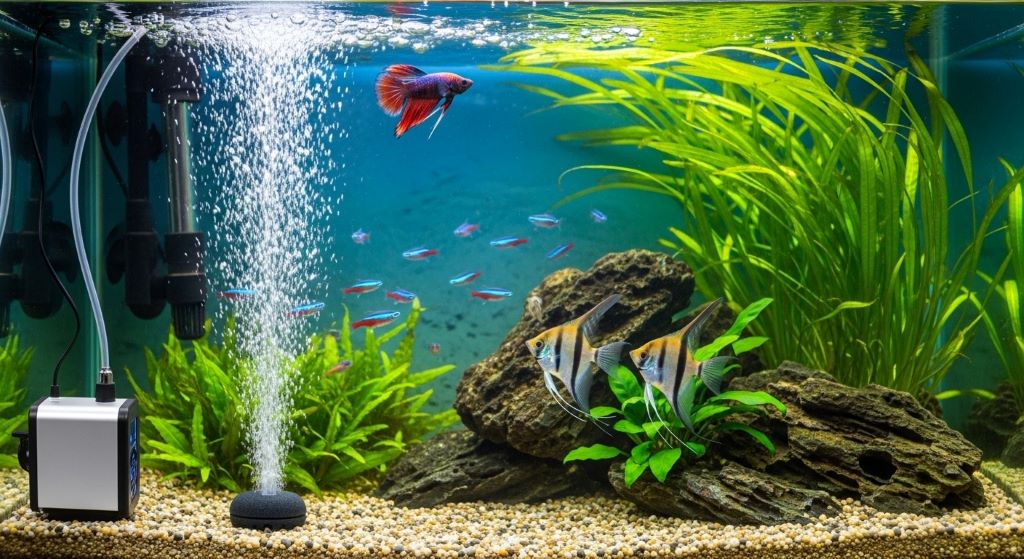
Proper bubble stone setup significantly impacts how effectively your system oxygenates the water. Placement matters more than many hobbyists realize. Positioning your air stone near the bottom of the tank creates a column of rising bubbles that promotes water circulation.
This circulation pattern draws water from the bottom upward, creating a gentle current throughout the tank. As bubbles rise, they carry water with them, which then spreads across the surface before descending again. This continuous cycle ensures that all areas of your aquarium receive oxygenated water.
Corner placement often works best because it doesn’t interfere with swimming space or viewing areas. However, some aquarists prefer hiding air stones behind decorations or plants. Just ensure that bubbles can still rise freely without obstruction.
Multiple smaller air stones distributed throughout the tank sometimes work better than one large stone. This approach creates more circulation patterns and eliminates dead zones where water remains stagnant. Experiment with different configurations to find what works best for your specific setup.
Different Types of Air Stones and Diffusers
Standard ceramic air stones are affordable and effective. They produce medium-sized bubbles that balance oxygen transfer with minimal noise. These workhorses of the aquarium hobby last for months with proper maintenance.
Fine bubble diffusers create tiny bubbles that maximize surface area for gas exchange. However, they require more powerful pumps to overcome the backpressure created by smaller pores. These diffusers work exceptionally well in deeper tanks where bubbles have more time to dissolve oxygen.
Flexible air stones can bend to fit unusual spaces or create specific bubble curtains. Made from rubber or silicone, they resist clogging better than ceramic options. Their durability makes them ideal for long-term installations.
Decorative aerators combine function with aesthetics. Treasure chests, divers, and volcanoes entertain while oxygenating. While they may cost more than basic stones, they add visual interest that enhances your aquarium’s appeal.

Installation and Setup Tips
Installing your aeration system correctly ensures optimal performance from day one. Start by positioning your air pump above the water level if possible. This prevents water from siphoning back into the pump during power failures.
If you must place the pump below the tank, install a check valve in the airline tubing. This small investment protects your equipment and prevents potentially dangerous situations. Always test the check valve periodically to ensure it’s functioning correctly.
Secure airline tubing with suction cup holders to keep it neat and prevent it from floating around your tank. Loose tubing can get caught in filters or create visual clutter that detracts from your aquarium’s appearance.
Before submerging your air stone, soak it in water for fifteen minutes. This step removes air trapped in the pores, allowing it to produce bubbles immediately when connected. Unsoaked stones may take time to start working properly.
Maintaining Your Aeration System
Regular maintenance keeps your system running efficiently. Air stones gradually clog with mineral deposits and algae growth. Every month, remove them and soak them in a vinegar solution to dissolve buildup. Rinse thoroughly before reinstalling.
Replace air stones every six months to maintain optimal performance. Even with regular cleaning, pores eventually become too clogged to function effectively. Fresh stones produce better bubbles and require less pump pressure.
Check airline tubing for cracks, kinks, or stiffness. Damaged tubing restricts airflow and reduces system efficiency. Replacing tubing costs little and takes minimal time, making it an easy maintenance task.
Clean or replace filters inside your air pump according to manufacturer recommendations. These filters prevent dust and debris from entering the pump mechanism. Dirty filters restrict airflow and make pumps work harder, potentially shortening their lifespan.
Balancing Aeration with Other Equipment
Your filter already provides some water movement and surface agitation. Consider this when determining how much additional aeration you need. Overly aggressive aeration can stress fish that prefer calmer water.
In planted tanks, balance matters even more. While plants need carbon dioxide to grow, excessive surface agitation drives CO2 out of the water. If you’re injecting CO2 for plant growth, you may need to reduce aeration or run it only at night.
Heaters and thermometers should be positioned away from strong bubble currents. Bubbles rising past temperature sensors can give false readings, while constant buffeting may damage heating elements over time.
Combine your aeration system with proper filtration for best results. While air pumps oxygenate water, they don’t remove waste or toxins. A complete aquarium system includes both mechanical filtration and adequate aeration working in harmony.
Special Considerations for Different Tank Types
Saltwater aquariums often require more vigorous aeration than freshwater tanks. The higher density of saltwater holds less dissolved oxygen, making supplemental aeration more critical. Protein skimmers in marine tanks also rely on fine bubbles to function properly.
Heavily planted tanks present unique challenges. During daylight, plants produce oxygen through photosynthesis, sometimes creating super-saturated conditions. At night, however, they consume oxygen, potentially depleting levels dangerously. Running your aerator on a timer that turns on at night helps maintain stable fish tank oxygen levels.
Cold water species need more oxygen than tropical fish. Species like goldfish have higher metabolic oxygen demands, especially in warmer water. Ensure your aeration system can handle these increased requirements.
Hospital or quarantine tanks benefit from extra aeration. Sick or stressed fish need more oxygen to support their immune systems and recovery. Temporary increases in bubble stone setup intensity can aid healing without permanent system modifications.
Troubleshooting Common Problems
If your pump suddenly becomes noisy, check for loose parts or mounting surfaces. Placing the pump on a foam pad dampens vibrations and reduces sound transmission. Sometimes simply tightening screws eliminates annoying rattles.
Weak airflow usually indicates clogged air stones or restrictive tubing. Disconnect components one at a time to isolate the problem. Often, simply replacing an old air stone restores full performance.
Pumps that run hot may be working too hard against excessive backpressure. Ensure your tubing isn’t kinked and your air stones aren’t completely clogged. Overheating shortens pump life and can lead to premature failure.
If bubbles seem unevenly distributed, check that your gang valve settings are balanced. Adjust each valve until you achieve the desired bubble distribution across all devices.
Advanced Techniques for Maximum Oxygenation
Creating a spray bar effect using airline tubing with multiple small holes increases surface agitation dramatically. This technique works especially well in long, shallow tanks where traditional air stones might not provide adequate coverage.
Combining powerheads with air stones creates powerful circulation currents that prevent dead zones. Position the powerhead to push water across the surface while air stones create rising columns from below. This two-pronged approach maximizes oxygen transfer efficiency.
Wavemakers programmed to pulse airflow create variable current patterns that more closely mimic natural environments. Fish appreciate the variety, and changing flow patterns prevent debris from settling in corners.
Consider adding a surface skimmer to remove oily biofilm that can block gas exchange. This thin layer significantly reduces oxygen absorption, and removing it improves overall tank health.
Conclusion
Maintaining proper fish tank oxygen levels requires understanding, the right equipment, and consistent maintenance. Air pumps provide reliable, continuous aeration that keeps your aquatic pets healthy and active. By following this aeration system guide and implementing proper bubble stone setup techniques, you create an environment where fish thrive.
Remember that each aquarium is unique. Monitor your fish behavior closely and adjust your aeration accordingly. The investment in quality equipment and time spent on proper setup pays dividends in the form of vibrant, healthy fish and crystal-clear water. Start implementing these techniques today, and watch your aquarium transform into a thriving underwater paradise.
Frequently Asked Questions
How long should I run my aquarium air pump each day?
Most aquariums benefit from continuous air pump operation. Running your pump all day and night maintains stable oxygen levels and prevents dangerous fluctuations. However, heavily planted tanks might only need nighttime aeration when plants consume rather than produce oxygen.
Can you have too much aeration in a fish tank?
Yes, excessive aeration can stress fish, especially species that prefer calm water. Overly strong currents exhaust fish and can cause fin damage. Additionally, too much surface agitation in planted tanks drives out beneficial carbon dioxide needed for plant growth.
How do I know what size air pump I need for my tank?
Check the pump specifications for recommended tank sizes. Generally, choose a pump rated for slightly larger than your actual tank size. This provides adequate power even when running multiple air stones or decorations simultaneously.
Why do my air stones stop producing bubbles after a while?
Air stones clog with mineral deposits, algae, and bacterial growth over time. Regular cleaning in vinegar solution extends their life, but eventually, they need replacement. Most air stones should be replaced every three to six months for optimal performance.
Will an air pump keep my aquarium water clean?
Air pumps oxygenate water but don’t remove waste or toxins. You still need proper filtration for water cleanliness. However, increased circulation from aeration helps distribute beneficial bacteria and prevents debris from settling, supporting overall tank health.
Related Topics:
How Long Do Washers and Dryers Last? A Complete Lifespan Guide
How to Measure Cabinet Handles: A Complete Guide for Perfect Fit and Style