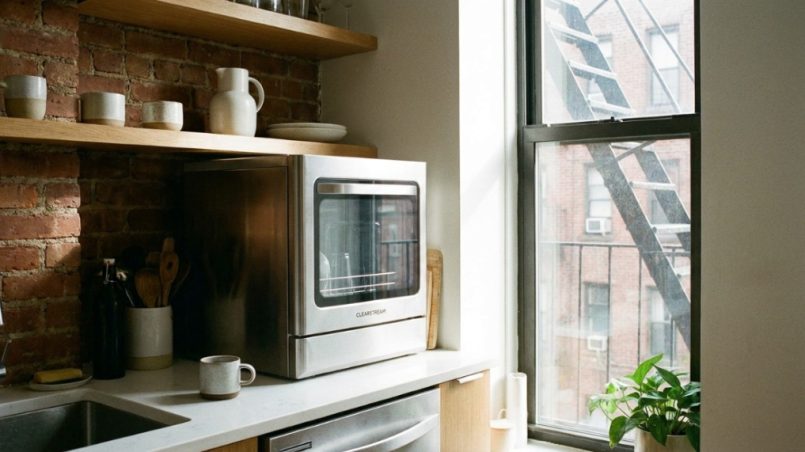
Living in a New York City apartment means every square inch of your kitchen counts. Counter space is precious, cabinets are tight, and the sink is often a single basin that doubles as everything from veggie washer to dish soaker. Now add a baby to the mix, and suddenly you are facing a daily pile of bottles, nipples, and pump parts that need serious cleaning. A dedicated bottle washer can solve that problem, but choosing the wrong one for a compact NYC kitchen can create a whole new headache. This guide breaks down exactly what to look for when shopping for the best bottle washer NYC apartments can accommodate, covering size constraints, installation realities, and the features that actually matter for daily use.
Key Takeaways
- Countertop models are the most practical choice for NYC rentals because they require no permanent installation and fit under standard upper cabinets.
- Measure your counter depth and clearance before buying; many full-size washers are too deep for typical NYC galley kitchens.
- Look for a model with a built-in drying cycle, since air-drying racks take up valuable counter space in small apartments.
- Consider the water hookup requirements carefully; some models connect directly to the faucet while others have a refillable tank.
- Prioritize machines with self-cleaning cycles and removable racks to prevent mold buildup in humid NYC apartments.
Why a Dedicated Bottle Washer Makes Sense in NYC
Hand-washing bottles in a small sink is doable, but it is time-consuming and rarely as thorough as a machine. Bottles have narrow necks, and nipples have tiny crevices where milk residue hides. A dedicated bottle washer uses high-pressure spray jets and high-temperature water to clean parts more effectively than hand washing. For busy parents in the city, the time savings alone justify the investment. Instead of spending 20 minutes scrubbing after every feeding, you load the machine, press a button, and move on with your day.
Beyond convenience, there is a hygiene factor. NYC tap water can leave mineral deposits on bottles, and warm, humid apartments create ideal conditions for bacteria growth. A bottle washer with a heated drying cycle eliminates moisture, which is the key to keeping bottles truly clean between uses. That combination of thorough cleaning and complete drying is hard to replicate with a dish rack and dish towel.
When you start comparing options, you will find that the best bottle washer NYC apartments typically balances cleaning power with a compact footprint. The goal is to find a machine that fits your counter, works with your plumbing, and handles your daily bottle volume without taking over your kitchen.
What to Look for in a Compact Bottle Washer
Not all bottle washers are created equal, and the ones marketed as “compact” still vary significantly in size, capacity, and features. Before you buy, you need to evaluate your kitchen setup and your daily bottle usage. A family with twins will need a larger capacity than a family with one baby who is mostly breastfed. Similarly, a kitchen with a deep counter can handle a bigger machine than a narrow galley setup.
Size and Footprint Considerations
Standard countertop bottle washers measure roughly 16 to 18 inches wide, 14 to 16 inches deep, and 15 to 18 inches tall. That sounds manageable, but you must measure your actual counter space. Many NYC apartments have counters that are only 20 to 22 inches deep, which means a 16-inch-deep machine leaves just a few inches of working space in front of it. That is workable, but it leaves no room for a coffee maker or toaster on the same stretch of counter.
Height matters too. If you plan to place the washer under an upper cabinet, you need at least 18 to 20 inches of clearance. Most models fit, but some taller units with a large water tank on top do not. Measure the space under your cabinets before you commit to a specific model,Looking for more clever ways to keep your urban home spotless? Check out these diy sticky window track cleaning tips to tackle hard-to-reach dust and grime.
Water Source and Drainage Options
This is the most overlooked consideration for NYC apartments. Some bottle washers connect directly to your kitchen faucet with an adapter, which means you cannot use the sink while the washer is running. Others have a refillable water tank that you fill manually before each cycle. Both options have trade-offs.
Faucet-connected models are convenient because they provide continuous water supply and do not require you to measure anything. However, the adapter can be finicky with certain faucet styles, especially pull-down spray heads or touchless models. Tank-based models are more flexible in terms of placement, but you have to remember to fill them, and they take up more counter space because of the tank.
Drainage is another factor. Most countertop washers drain directly into the sink, which is simple and works well. Just make sure the drain hose reaches your sink basin comfortably without kinking. If your sink is across the kitchen from your only available counter space, you may need to rethink your placement.
Key Features That Matter for Small Kitchens
Once you have narrowed down the size and water source, focus on the features that make daily use easier. In a small apartment, every feature should earn its place. A machine with too many unnecessary modes is just clutter, but a few key functions can genuinely improve your routine.
Drying Performance
In NYC, where humidity is often high and space is tight, a washer that dries bottles completely is non-negotiable. Look for a model with a dedicated drying cycle that uses heated air rather than just a fan. Heated drying evaporates all moisture, so bottles are ready to use or store immediately. Without this feature, you will still need a drying rack, which defeats the purpose of saving counter space.
Cycle Time and Noise Level
Cycle times vary from about 30 minutes to over an hour. In a small apartment, a long cycle can be disruptive, especially if the machine is near the living area. Look for a quick-wash mode for lightly soiled bottles and a deep-cleaning mode for the evening load. Also, pay attention to noise ratings. Some budget models vibrate loudly on the counter, which is annoying in a thin-walled NYC building.
Capacity and Rack Design
Most countertop washers hold between four and six standard bottles at a time, plus nipples, caps, and small parts. That is sufficient for a single baby, but if you are washing pump parts and pacifiers too, you will want a model with a well-designed basket system. Removable racks make loading and unloading easier, and they are also easier to clean when milk residue builds up over time.
Comparing Countertop Washers vs. Full-Size Dishwashers
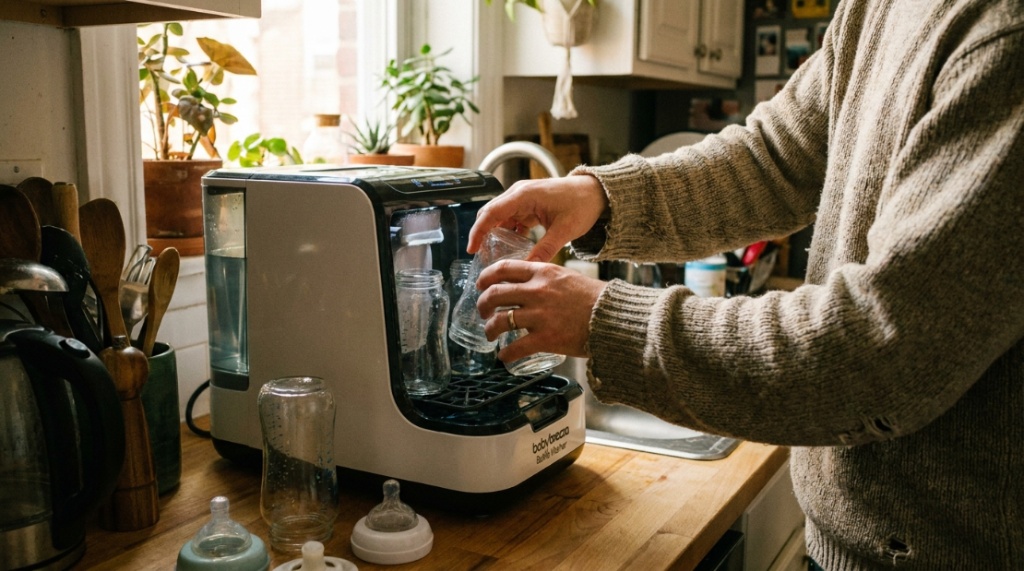
Some parents wonder whether a regular dishwasher with a bottle basket is enough. In a full-size dishwasher, bottles can be cleaned on the top rack, but the water temperature and spray pressure are not always sufficient for narrow bottle interiors. Also, full-size dishwashers are rare in NYC apartments. Many rentals do not have them at all, and the ones that do are often compact 18-inch models that are already packed with dishes.
A dedicated bottle washer is specifically designed for baby items. It uses higher water temperatures, targeted spray jets, and a sanitizing cycle that kills more bacteria than a standard dishwasher. If you already have a full-size dishwasher, you might get away with using it for bottles, but you will still need to hand-wash nipples and small parts. For most NYC parents, a dedicated countertop washer is the more practical solution.
Pros and Cons of Dedicated Bottle Washers
Here is a quick breakdown of the trade-offs to help you decide:
- Pros: Thorough cleaning, built-in drying, compact footprint, no need for a full-size dishwasher, saves time.
- Cons: Takes up counter space, requires water access, adds another appliance to your kitchen, initial cost is higher than a drying rack.
If you have the counter space and the budget, the convenience is hard to beat. If you are truly limited on space, consider a model that can be stored in a cabinet and pulled out only when needed, though this adds setup time to every wash.
Installation and Setup in a Rental Apartment
Most countertop bottle washers are designed for easy setup, but you still need to think about your specific kitchen configuration. If you rent, you cannot make permanent changes to the plumbing, so a faucet adapter or a refillable tank is your only option. Both are renter-friendly, but the faucet adapter requires that your faucet has a standard threaded aerator. If your faucet has a non-standard tip, you may need an additional adapter, which is easy to find online but adds a step to the setup.
Placement matters for usability. Ideally, the washer should sit next to the sink so you can rinse bottles before loading and let the drain hose reach the basin easily. If your sink is in an island and your counters are on the wall, you may need to run the drain hose across the counter, which is unsightly and can be a tripping hazard.
One more consideration: vibration. A bottle washer that is not level can walk across the counter during the spin cycle. Look for a model with rubber feet or a leveling system. If your counter is uneven, you can use a silicone mat underneath to keep the machine stable.
Maintenance and Cleaning Tips
Like any appliance that handles water and heat, a bottle washer needs regular maintenance to stay effective and hygienic. In NYC, where water is hard, mineral scale can build up inside the machine over time. Most models have a self-cleaning cycle that you should run weekly with a descaling solution or white vinegar. This prevents clogs in the spray arms and keeps the interior free of residue.
You should also wipe down the door seal and the exterior regularly. Milk residue can splatter during the wash cycle, and if left to dry, it becomes hard to remove. The removable racks and baskets should be washed by hand or in the top rack of a dishwasher periodically to prevent buildup in the crevices.
Finally, check the drain hose for clogs. Small pieces of food or milk film can accumulate over time, slowing drainage and leaving water standing in the bottom of the machine. A quick rinse of the hose under running water every few weeks prevents this issue.
Frequently Asked Questions
Can I use a bottle washer in a small NYC apartment?
Yes, but you need to choose a compact countertop model and measure your available space carefully. Most models fit under standard upper cabinets and require only a faucet connection or a refillable water tank, making them suitable for rentals.
How long does a bottle washer cycle take?
Most cycles run between 30 and 60 minutes, depending on the model and the selected mode. Quick-wash modes for lightly soiled bottles are usually around 30 minutes, while deep-cleaning and sanitizing cycles take longer.
Do I still need to rinse bottles before putting them in the washer?
Yes, a quick rinse removes large milk particles and prevents them from clogging the machine’s filter. You do not need to scrub; just rinse thoroughly with warm water before loading.
Is a bottle washer worth it if I only have one baby?
If you are bottle-feeding exclusively, a bottle washer saves significant time and ensures thorough cleaning and drying. If you are mostly breastfeeding and only use bottles occasionally, a manual drying rack may be sufficient.
Can the bottle washer clean pump parts and pacifiers?
Yes, most models come with baskets or racks designed to hold small parts like pump flanges, valves, pacifiers, and bottle nipples. Just make sure the parts are dishwasher-safe and heat-resistant before placing them in the washer.
Conclusion
Finding the right bottle washer for a New York City apartment comes down to three things: size, water access, and drying performance. Measure your counter space, check your faucet compatibility, and prioritize a model with a heated drying cycle to save space and prevent bacteria growth. A compact countertop washer is the most practical choice for renters, and with proper maintenance, it will handle daily bottle duty without dominating your kitchen. Take your time comparing features, read the fine print on dimensions, and choose the machine that fits both your counter and your daily routine. The right pick will make feeding time easier and give you back precious minutes every day.