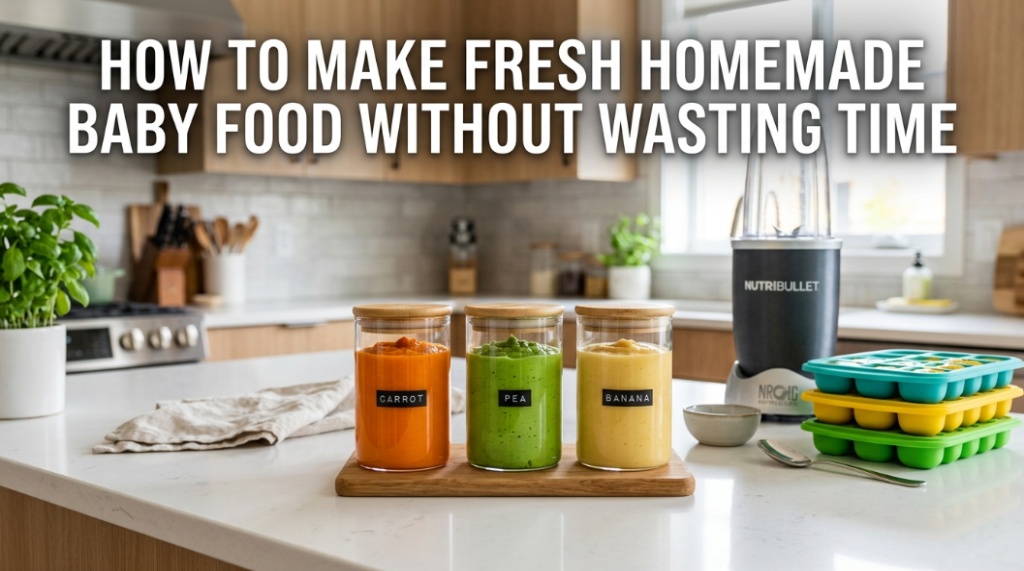
Most parents discover something surprising after their baby’s first few weeks of solids: the longest part of making fresh homemade baby food is not cooking—it is deciding what to make, cleaning equipment, and repeating the same prep work every day. The fastest solution is batch preparation using simple ingredients, proper storage methods, and a reliable baby food processor that turns fresh fruits, vegetables, and proteins into ready-to-serve meals in minutes
Making baby food at home allows parents to control ingredients, avoid unnecessary additives, reduce packaging waste, and save money compared with many pre-packaged options. Yet many families abandon the idea because they assume it requires hours in the kitchen every week. In reality, with smart planning and a few efficient techniques, you can prepare multiple meals in less than an hour.
This guide explains exactly how to make fresh homemade baby food without wasting time. You’ll learn which ingredients work best, how to organize organic baby food prep, safe storage practices, time-saving tools, and answers to the most common questions parents ask before starting solids.
What Is Fresh Homemade Baby Food and Why Do Parents Prefer It?
Fresh homemade baby food is baby-safe food prepared from whole ingredients and processed into age-appropriate textures at home.
Unlike many commercially prepared options, homemade baby food gives parents full control over ingredients, consistency, portion sizes, and freshness. Whether using steamed sweet potatoes, mashed bananas, cooked peas, or blended chicken, every meal can be customized according to a baby’s developmental stage.
Many parents choose homemade options because they can:
- Control ingredient quality
- Avoid added sugars and unnecessary preservatives
- Introduce a wider variety of flavors
- Reduce food costs
- Support dietary preferences
- Create flexible meal combinations
Families interested in healthier food sourcing often apply lessons from community-focused healthy food initiatives and nutrition education programs when selecting ingredients for infant meals.
Organizations such as the American Academy of Pediatrics recommend introducing nutrient-rich foods around six months of age while continuing breast milk or formula as primary nutrition.
How Can You Make Homemade Baby Food Quickly Instead of Cooking Every Day?
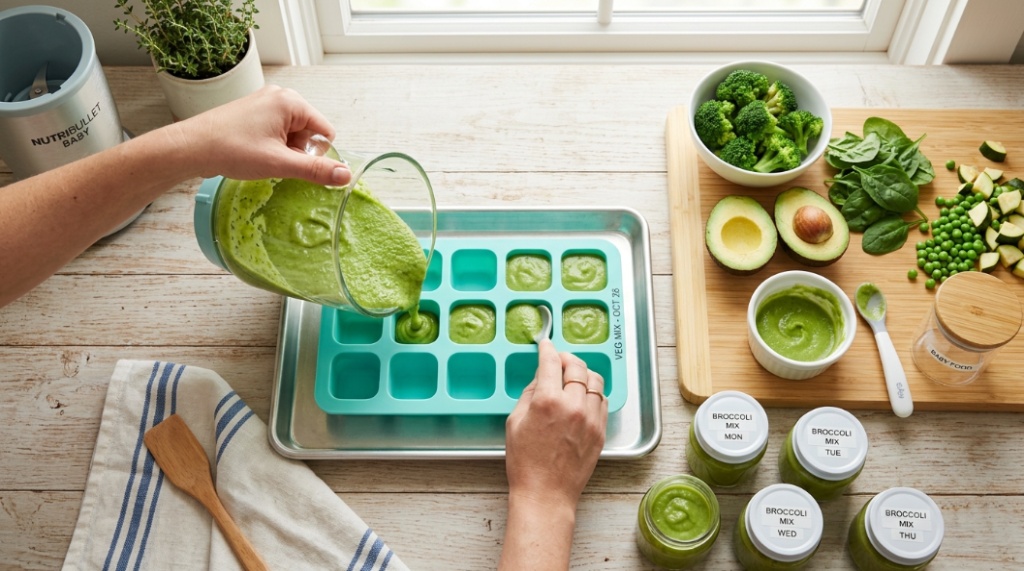
The fastest method is batch cooking once or twice weekly and freezing portions for future meals.
Instead of preparing food every day, cook several ingredients at once and divide them into small servings.
A practical weekly routine looks like this:
- Steam vegetables together
- Bake fruits that require softening
- Cook grains in bulk
- Prepare protein sources separately
- Blend or mash in batches
- Freeze portions immediately
For example, one hour of meal prep can produce:
- Sweet potato puree
- Carrot puree
- Pea puree
- Apple puree
- Pear puree
- Oatmeal portions
- Chicken and vegetable blends
This approach reduces daily kitchen work to simply thawing and serving.
What Equipment Saves the Most Time?
A quality baby food processor combines steaming, blending, and pureeing into one workflow.
Parents who want an all-in-one solution often compare specialized appliances before buying. If you’re evaluating options, this detailed guide to the best baby food maker for efficient home meal preparation can help identify tools that simplify blending, steaming, and portioning.
Other useful tools include:
- Food steamer
- Immersion blender
- Silicone freezer trays
- Glass storage containers
- Instant-read thermometer
- Mesh strainers
- Cutting boards dedicated to producing
Which Ingredients Are Best for Organic Baby Food Prep?
Nutrient-dense fruits, vegetables, grains, and proteins provide the best foundation for organic baby food prep.
Parents frequently prioritize organic ingredients for foods that may contain higher pesticide residues. While both conventional and organic produce can be healthy, choosing fresh, properly washed ingredients remains most important.
Fruits for Beginners
- Bananas
- Pears
- Apples
- Peaches
- Avocados
- Mangoes
Vegetables for Beginners
- Sweet potatoes
- Carrots
- Pumpkin
- Peas
- Butternut squash
- Zucchini
Grains
- Oatmeal
- Brown rice
- Quinoa
- Barley
Protein Sources
- Chicken
- Turkey
- Lentils
- Beans
- Eggs (when age-appropriate)
- Fish with low mercury levels
The goal is variety. Repeated exposure to different tastes and textures can help expand food acceptance over time.
What Is the Easiest Step-by-Step Process for Making Baby Food?
Wash, cook, blend, portion, cool, and store. Following these six steps prevents unnecessary effort and improves consistency.
Food innovation discussions, including debates about how future food production may evolve through sustainable alternatives, highlight the growing importance of understanding food sourcing and preparation from an early stage of life.
Step 1: Wash Thoroughly
Rinse all fruits and vegetables under running water before peeling or cutting.
Step 2: Cook When Necessary
Steam vegetables until soft. Baking also works well for sweet potatoes, squash, and apples.
Step 3: Blend or Mash
Use cooking liquid, breast milk, or formula to adjust texture if needed.
Step 4: Portion Immediately
Transfer food into small containers or freezer trays.
Step 5: Cool Safely
Allow food to cool before refrigeration or freezing.
Step 6: Store Correctly
Label containers with preparation dates for easy rotation.
Should You Steam, Boil, Bake, or Blend Ingredients?
Steaming generally preserves nutrients well while producing ideal textures for baby food.
| Method | Advantages | Best For |
|---|---|---|
| Steaming | Good nutrient retention | Vegetables, fruits |
| Baking | Enhances natural sweetness | Sweet potatoes, apples, squash |
| Boiling | Simple and fast | Hard vegetables, grains |
| Blending | Creates smooth textures | Purees and mixed meals |
| Mashing | Encourages texture progression | Bananas, avocado, soft foods |
Many parents combine methods. For example, steamed carrots may be blended with baked sweet potatoes to create a balanced puree.
How Do You Store Homemade Baby Food Safely?
Refrigerate short-term portions and freeze extras immediately after preparation.
Proper storage helps preserve quality while reducing food waste.
Refrigerator Guidelines
- Use airtight containers
- Store at safe refrigeration temperatures
- Consume within recommended timeframes
- Avoid repeated warming and cooling
Freezer Guidelines
- Freeze in single-serving portions
- Label dates clearly
- Use freezer-safe containers
- Rotate oldest food first
How Should Food Be Thawed?
Transfer frozen portions to the refrigerator overnight or use safe warming methods immediately before feeding.
Never leave baby food at room temperature for extended periods.
What Common Mistakes Waste Time and Money?
Preparing too many varieties at once, storing improperly, and buying unnecessary gadgets are the most common mistakes.
Many first-time parents overcomplicate the process.
Avoid these common issues:
- Making excessive quantities before testing acceptance
- Ignoring storage labels
- Buying large amounts of perishable produce
- Creating overly complicated recipes
- Using unsafe storage containers
- Skipping meal planning
Start simple. Three or four ingredients prepared efficiently are often more practical than ten elaborate recipes.
Can You Prepare an Entire Week of Baby Food in One Session?
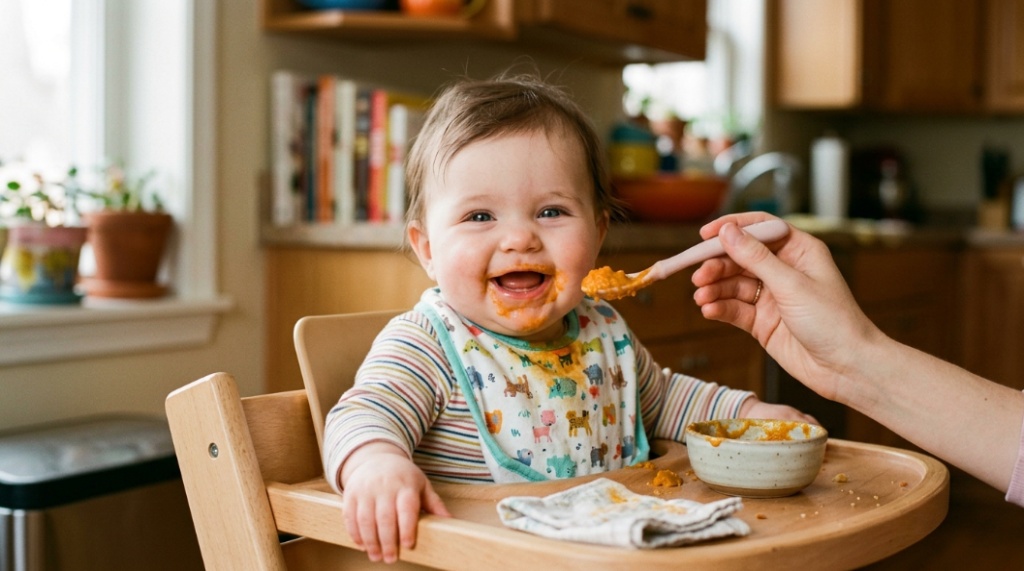
Yes. Many families successfully prepare a week’s worth of baby meals in 45 to 90 minutes.
Here is an example workflow:
- Steam carrots and peas
- Bake sweet potatoes
- Cook oatmeal
- Prepare chicken separately
- Blend ingredients into multiple combinations
- Freeze portions in trays
Possible meal combinations include:
- Sweet potato and carrot
- Pea and potato
- Apple and oatmeal
- Pear and oatmeal
- Chicken and sweet potato
- Chicken and peas
This strategy significantly reduces weekday cooking demands.
When Should Babies Transition Beyond Purees?
Most babies gradually move from smooth purees to thicker textures as oral motor skills improve.
Developmental readiness often includes:
- Sitting with support
- Showing interest in food
- Moving food around the mouth effectively
- Improved chewing motions
Texture progression typically follows:
- Smooth purees
- Thicker purees
- Mashed foods
- Soft finger foods
- Family meals with modifications
Consult your pediatrician if you have concerns about feeding progression or food introduction.
Conclusion: What Is the Fastest Way to Make Fresh Homemade Baby Food?
The most efficient method is batch cooking, organized storage, and using simple whole-food ingredients.
Fresh homemade baby food does not require hours in the kitchen. By preparing ingredients once or twice a week, portioning meals immediately, and using tools that streamline blending and steaming, parents can provide nutritious meals while minimizing effort. Smart organic baby food prep strategies reduce waste, save money, and make feeding routines more manageable.
Many parents also find inspiration from broader discussions around healthy food education and community nutrition initiatives when developing long-term family eating habits.
Start with a few simple ingredients, focus on consistency rather than perfection, and gradually expand your baby’s menu. Small preparation habits today can create a smoother, less stressful feeding experience for months to come.
Frequently Asked Questions About Fresh Homemade Baby Food
Is homemade baby food healthier than store-bought baby food?
Homemade baby food can offer greater ingredient control and freshness, but both homemade and commercial options can be nutritious when chosen carefully.
The biggest advantage is knowing exactly what ingredients are included and adjusting textures according to your baby’s developmental stage.
Can I freeze homemade baby food?
Yes. Freezing is one of the best ways to save time and reduce waste.
Portion food into freezer trays or small containers, label dates, and thaw safely before serving.
Do I need a baby food processor?
No, but it can make preparation faster and more convenient.
A standard blender, food processor, immersion blender, or potato masher can also produce excellent results.
What foods should babies try first?
Common first foods include sweet potatoes, bananas, avocados, pears, peas, oatmeal, and carrots.
These foods are generally easy to prepare and can be adjusted to appropriate textures.
How often should I prepare baby food?
Most parents find once or twice per week sufficient.
Batch cooking reduces daily preparation and keeps meals readily available.
Can babies only eat organic foods?
Babies can thrive on either organic or conventionally grown foods.
The most important priorities are food safety, variety, nutrient density, and proper preparation.
How do I know when my baby is ready for thicker textures?
Signs include improved chewing motions, better head control, sitting ability, and successful handling of smooth purees.
Gradually increase texture complexity while monitoring your baby’s comfort and developmental readiness.