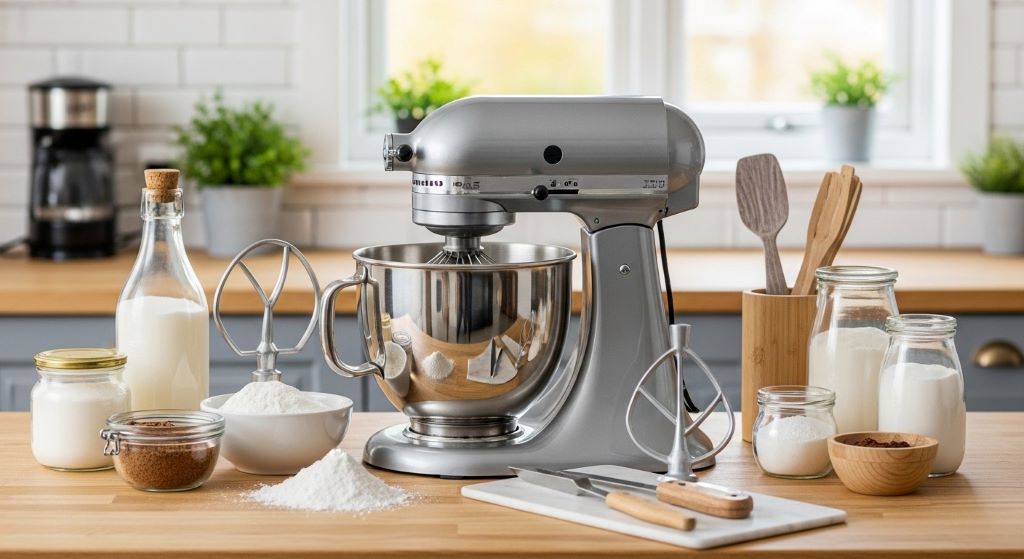
Purchasing a kitchen stand mixer represents a significant investment for any home cook. These powerful appliances can last for decades when chosen wisely. However, the abundance of options available in 2026 can make the selection process overwhelming. Learning to evaluate reviews effectively will help you make an informed decision that suits your cooking needs and budget.
Why Reviews Matter for Kitchen Appliances
Reading reviews before buying helps you avoid costly mistakes. Real users share honest experiences that marketing materials rarely reveal. Therefore, spending time researching can save you from buyer’s remorse down the line.
Reviews provide insights into long-term performance. While manufacturers highlight features and specifications, actual users discuss how the mixer performs after months or years of use. Additionally, reviews often reveal problems that only become apparent with regular use.
Understanding Different Types of Reviews
Not all reviews carry equal weight. Professional evaluations differ significantly from customer feedback. Each type offers unique value when making your purchasing decision.
Professional reviews come from culinary experts and product testers who evaluate appliances systematically. These reviewers test multiple units under controlled conditions. They compare performance across various tasks like kneading dough, whipping cream, and mixing batters. Furthermore, they assess build quality, motor power, and accessory compatibility.
Customer reviews provide real-world perspectives from everyday users. These individuals share experiences from their own kitchens. They discuss ease of use, cleaning challenges, and customer service interactions. However, remember that individual experiences can vary widely based on usage patterns and expectations.
Identifying Trustworthy Review Sources
Not every review platform maintains the same standards. Some sites allow unverified purchases, while others require proof of ownership. Consequently, knowing where to look becomes crucial.
Reputable cooking magazines and websites employ trained reviewers who follow consistent testing protocols. These sources often provide detailed appliance ratings based on multiple criteria. They test mixers with various recipes and measure objective factors like noise levels and mixing efficiency.
Verified purchase reviews on retail websites offer another reliable source. These reviews come from confirmed buyers. Look for detailed feedback rather than brief comments. Reviewers who describe specific use cases and provide photos typically offer more valuable information.
Decoding Review Rating Systems
Understanding how ratings work helps you interpret them correctly. Different platforms use various scales and methodologies. Therefore, a four-star rating on one site might not equal a four-star rating elsewhere.
Many review sites use five-star systems. However, the criteria for each star level varies. Some platforms weight certain factors more heavily than others. For instance, one site might prioritize durability while another emphasizes ease of use.
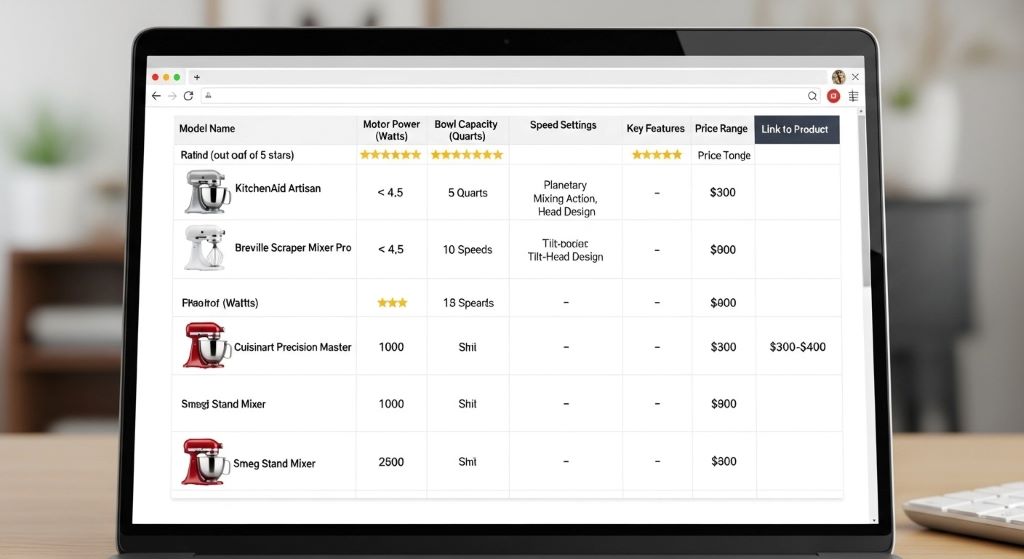
A comparison chart can help you evaluate multiple models side by side. These charts typically list key specifications and ratings across various categories. They allow you to see strengths and weaknesses at a glance. Moreover, they help you identify which features matter most for your needs.
Key Features to Look for in Reviews
Certain aspects deserve special attention when reading reviews. These features significantly impact your long-term satisfaction with the appliance.
Motor Power and Performance
Reviews should discuss motor strength and its real-world implications. A powerful motor handles heavy doughs without straining. Look for comments about the mixer’s ability to maintain speed under load. Additionally, check whether reviewers mention overheating issues during extended use.
The wattage alone doesn’t tell the complete story. A well-designed mixer with a 500-watt motor might outperform a poorly designed 700-watt model. Therefore, seek reviews that describe actual performance rather than just listing specifications.
Build Quality and Durability
Construction quality determines how long your mixer will last. Reviews often reveal whether the housing feels sturdy or flimsy. Metal components generally outlast plastic ones. However, quality plastic can perform well in certain applications.
Pay attention to comments about wobbling or walking during operation. A stable mixer stays put even when working with stiff dough. Furthermore, check for mentions of stripped gears or motor failures, which indicate poor durability.
Capacity and Bowl Size
The bowl size affects how much you can prepare at once. Reviews from users with similar needs provide the most relevant insights. A baker who regularly makes multiple loaves of bread requires different capacity than someone who occasionally whips cream.
Consider whether reviewers found the advertised capacity accurate. Some manufacturers measure capacity generously. Real-world testing often reveals that practical capacity falls short of marketing claims.
Attachments and Versatility
Many mixers accept various attachments that expand functionality. Reviews should discuss the range of available accessories and their quality. Additionally, look for comments about how well attachments connect and perform.
Some brands offer proprietary attachments while others use universal connections. Reviews can clarify whether third-party accessories work effectively. This matters because it affects long-term versatility and cost.
Ease of Use and Cleaning
Daily usability significantly impacts satisfaction. Reviews should address how intuitive the controls are and whether the mixer requires frequent adjustments. Look for mentions of how easily ingredients incorporate without manual intervention.
Cleaning convenience matters for appliances used regularly. Dishwasher-safe components save time and effort. However, some reviewers note that certain parts clean better by hand despite being dishwasher-safe.
Reading Between the Lines
Critical reading skills help you extract maximum value from reviews. Not everything reviewers say should be taken at face value.
Extreme opinions often provide less useful information than moderate ones. Extremely positive reviews might come from people who rarely use their mixer or have low expectations. Conversely, very negative reviews sometimes reflect unrealistic expectations or user error rather than product flaws.
Look for patterns across multiple reviews. If several people mention the same issue, it likely represents a genuine problem. However, isolated complaints might reflect individual circumstances or defective units.
Consider the reviewer’s experience level. An accomplished baker has different needs than someone making their first batch of cookies. Therefore, evaluate whether the reviewer’s situation matches yours.
Comparing Multiple Models Effectively
Once you’ve read individual reviews, comparing options helps narrow your choices. Creating your own notes or spreadsheet can organize information effectively.
List your must-have features first. These non-negotiable requirements immediately eliminate unsuitable options. Next, rank your nice-to-have features in order of importance. This prioritization helps when comparing models with different strengths.
Use official charts and tables as starting points but supplement them with review insights. Specifications tell you what features exist, while reviews reveal how well they work. Additionally, reviews often highlight practical considerations that specifications omit.
Watching Video Reviews
Video reviews provide visual demonstrations that text cannot match. Seeing the mixer in action helps you understand its size, noise level, and operation.
Look for videos that show the mixer handling tasks you plan to perform. If you bake bread, watch reviews featuring dough kneading. Pay attention to how the mixer handles the load and whether the reviewer seems satisfied with the results.
Professional video reviews often include sound measurements and performance tests. These objective assessments complement subjective opinions. Moreover, they allow you to compare models more fairly.
Considering Price and Value
Reviews help you determine whether a mixer offers good value at its price point. Expensive doesn’t always mean better, especially if you don’t need premium features.
Look for reviews from users who’ve owned both budget and premium models. Their comparisons provide valuable context about what extra money actually buys. Sometimes, mid-range models offer the best balance of features and affordability.
Consider the cost of replacement parts and accessories. Some brands charge premium prices for additional bowls or attachments. Reviews sometimes mention these ongoing costs, which affect total ownership expenses.
Recognizing Fake or Biased Reviews
Unfortunately, not all reviews represent genuine user experiences. Learning to spot suspicious reviews protects you from misleading information.
Reviews posted immediately after product release often lack credibility. Genuine users need time to test appliances thoroughly. Therefore, be skeptical of numerous five-star reviews appearing on launch day.
Extremely similar wording across multiple reviews suggests coordination. Authentic reviews use varied language and describe different experiences. Additionally, check reviewer profiles when possible. Accounts that only post positive reviews for one brand might not be trustworthy.
Taking Warranty and Customer Service into Account
Reviews often discuss manufacturer support and warranty claims. These experiences matter because even reliable appliances occasionally need service.
Look for comments about warranty claim processes. Some companies make claims easy while others create obstacles. Additionally, check whether reviewers received timely responses to questions or problems.
Availability of replacement parts affects long-term ownership. Reviews sometimes mention difficulty obtaining specific components. This information helps you gauge whether the manufacturer supports products after sale.
The length of warranty coverage varies significantly between brands. Some manufacturers offer basic one-year warranties while others provide five years or more. However, warranty length alone doesn’t indicate quality. Read reviews to learn whether companies honor their warranties fairly.
Understanding Common Complaints
Certain issues appear repeatedly in stand mixer reviews. Recognizing these patterns helps you identify potential dealbreakers.
Noise levels concern many users. Some mixers operate quietly while others create significant racket. If you live in an apartment or plan to use your mixer early in the morning, noise matters. Look for specific descriptions rather than vague comments about sound.
Splashing and mess frustrate users who work with liquid ingredients. Well-designed mixers include splash guards or pouring shields. Reviews reveal whether these accessories actually prevent messes or merely look good in photos.
Speed control problems appear in reviews of both budget and premium models. Some mixers lack sufficient speed options while others jump too drastically between settings. Smooth, gradual speed transitions allow better control over mixing processes.
Evaluating Brand Reputation
Brand history provides context for individual product reviews. Established manufacturers typically offer better support and replacement parts availability.
Legacy brands benefit from decades of experience in appliance design. They understand common failure points and engineer solutions. However, newer companies sometimes innovate more aggressively and offer better value. Therefore, don’t dismiss unfamiliar brands without researching their reviews thoroughly.
Some brands specialize in kitchen appliances while others produce diverse product lines. Specialists often provide superior customer service because they focus their resources. Reviews can reveal whether a company truly supports its products or simply sells them.
Making Your Final Decision
After thorough research, you’ll have substantial information to guide your choice. Trust the patterns you’ve identified rather than fixating on individual opinions.
Weigh the importance of various factors based on your cooking habits. A feature that one reviewer considers essential might be irrelevant to your needs. Therefore, personalize your evaluation rather than simply buying the highest-rated model.
Remember that no mixer perfectly suits everyone. The best choice for you balances your budget, cooking style, and space constraints. Reviews provide information, but you make the final decision based on your unique circumstances.
Conclusion
Reading kitchen stand mixer reviews effectively requires a strategic approach. Start by identifying trustworthy sources that provide detailed, balanced assessments. Look for expert mixer reviews that offer systematic evaluations alongside real customer experiences. Use comparison charts to organize information about multiple models efficiently.
Pay attention to key features like motor power, build quality, capacity, and ease of cleaning. Read between the lines to distinguish genuine insights from extreme opinions or potential bias. Watch video reviews to see mixers in action and verify claims made in text reviews.
Consider the complete ownership experience, including warranty support and long-term durability. Remember that appliance ratings provide useful starting points but should be interpreted within the context of your specific needs. By combining information from multiple sources and thinking critically about what you read, you’ll confidently select a stand mixer that serves you well for years to come.
Frequently Asked Questions
How many reviews should I read before buying a stand mixer?
Read at least 20 to 30 reviews from various sources to identify consistent patterns. Include both professional evaluations and customer feedback. Focus on reviews from users whose cooking style matches yours for the most relevant insights.
Are expensive stand mixers always better than budget models?
Not necessarily. Price often reflects brand reputation and additional features rather than core performance. Many mid-range mixers perform excellently for typical home cooking tasks. Determine which features you actually need before assuming expensive means better.
Should I trust reviews with extreme ratings, either very high or very low?
Approach extreme reviews with caution. While they can highlight significant strengths or flaws, moderate reviews often provide more balanced perspectives. Look for detailed explanations rather than emotional reactions. Multiple reviews mentioning the same issue carry more weight than single extreme opinions.
How recent should reviews be for me to consider them relevant?
Prioritize reviews from the past year since manufacturers sometimes update models or change component suppliers. However, older reviews still offer value regarding long-term durability. Look for comments about how mixers perform after years of use, which newer reviews cannot provide.
Can I trust reviews on manufacturer websites?
Manufacturer websites typically filter out extremely negative reviews, so they present an overly positive picture. Use them as supplementary information but rely primarily on independent platforms. Verified purchase reviews from third-party retailers generally offer more balanced perspectives.
Related Topics:
The Unsung Hero of Your Culinary Space: Finding the Best Kitchen Towel for Your Needs in 2025
How to Make Waffle Hotdog Recipe