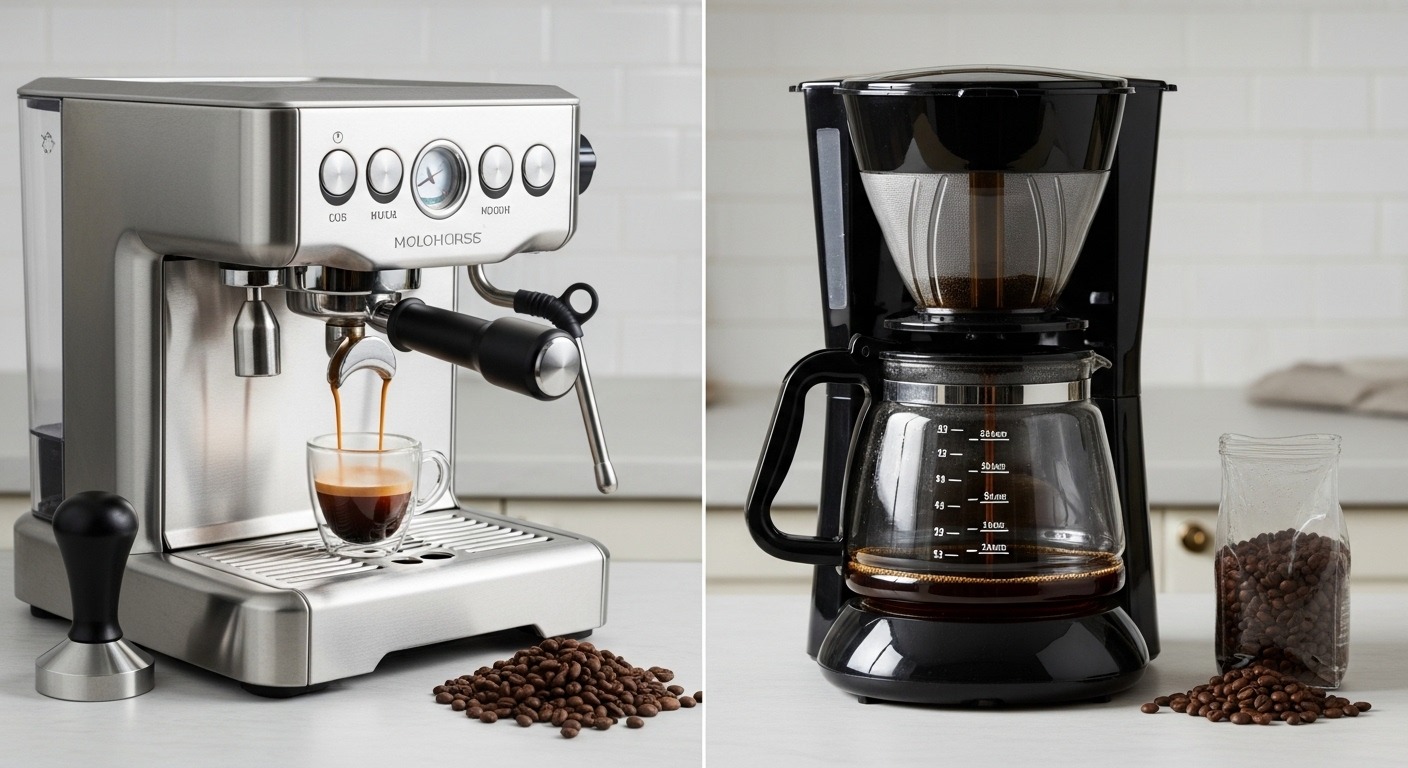
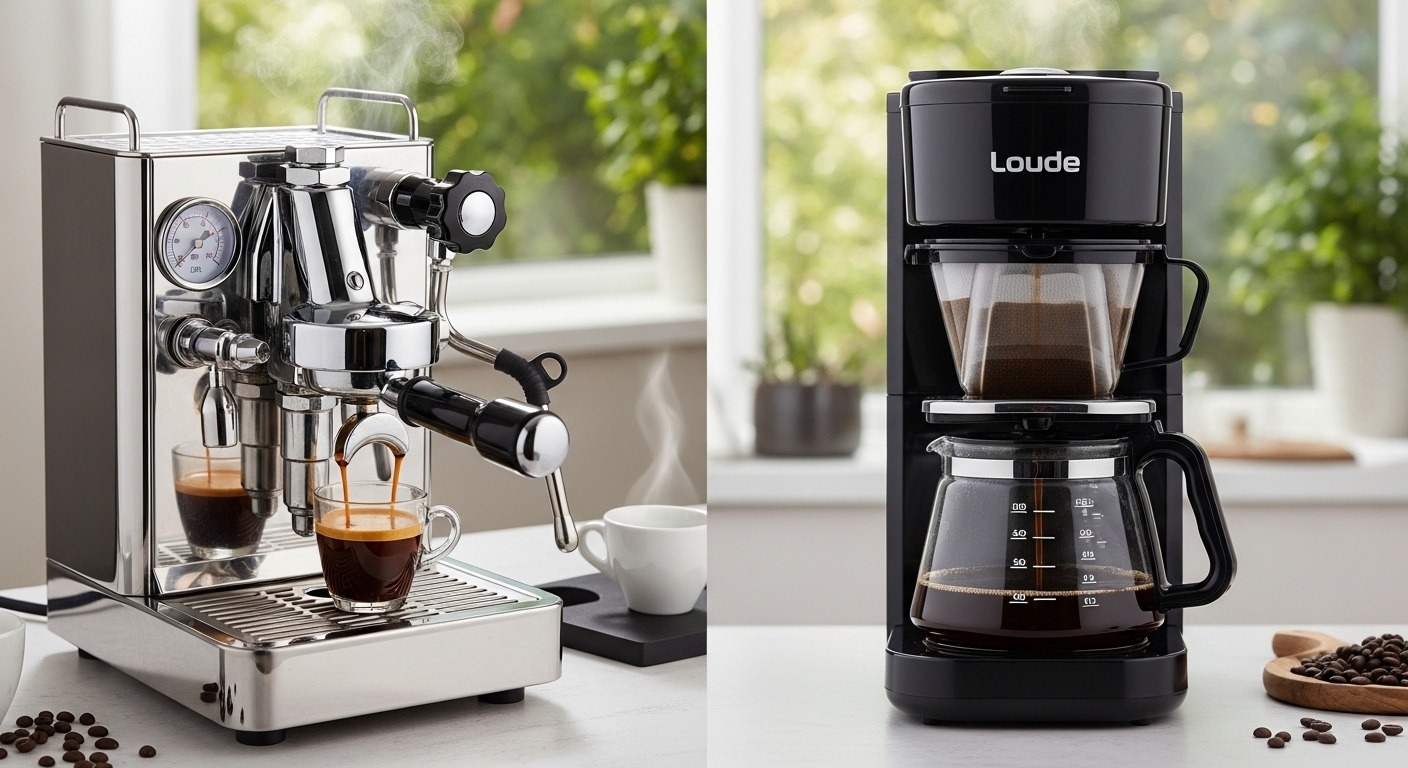
An espresso machine uses high pressure brewing to force hot water through finely ground coffee in about 25–30 seconds, producing a concentrated shot. A drip coffee maker uses gravity to pass hot water slowly through medium-ground coffee over 4–6 minutes, creating a larger, milder cup.
That’s the technical difference. But if you’re choosing between a home espresso machine and a drip brewer, the real question is about taste, strength, cost, convenience, and long-term value.
Many buyers assume espresso is “stronger” and drip is “weaker.” That’s partly true. But strength is not just about caffeine. It’s about concentration, extraction method, grind size, brew time, and water pressure.
In this guide, we’ll break down the facts. We’ll compare pressure brewing, coffee strength comparison, cost, maintenance, and real-world use cases. You’ll get data-backed insights. No hype. No fluff. Just practical answers so you can choose the right machine for your kitchen.
How does a home espresso machine actually work?
Short answer: A home espresso machine uses 9–15 bars of pressure to extract coffee quickly, creating a dense, concentrated shot with crema.
Espresso relies on pressure brewing. Instead of letting water drip through grounds, the machine forces water at high pressure through tightly packed, finely ground coffee.
Key mechanics of espresso brewing:
- Water temperature: 90–96°C (195–205°F)
- Pressure: Typically 9 bars during extraction
- Brew time: 25–30 seconds
- Grind size: Fine
- Yield: 25–30 ml per shot
Because of the pressure and fine grind, extraction is fast and intense. The result is a thick liquid with oils and dissolved solids. That layer of foam on top? That’s crema, formed when pressure emulsifies coffee oils.
Case study insight:
According to Specialty Coffee Association brewing standards, optimal espresso extraction typically yields 18–22% extraction and 8–12% total dissolved solids (TDS). That’s significantly higher concentration than drip coffee, which averages 1.2–1.5% TDS.
This is why espresso tastes stronger. It’s more concentrated, not necessarily higher in total caffeine.
A home espresso machine can also steam milk. That allows you to make cappuccinos, lattes, and flat whites. But that flexibility comes with a learning curve.
How does a drip coffee maker work?
Short answer: A drip coffee maker heats water and lets gravity pull it through medium-ground coffee into a carafe over several minutes.
Drip brewing is immersion and filtration combined. Water heats in a chamber. It rises through a tube. Then it showers over coffee grounds in a filter basket. Gravity does the rest.
Key mechanics of drip brewing:
- Water temperature: 90–96°C
- Pressure: 1 bar (atmospheric)
- Brew time: 4–6 minutes
- Grind size: Medium
- Yield: 240 ml or more per serving
Because there’s no pressure brewing, extraction happens more slowly. The result is a lighter-bodied coffee with lower concentration but higher total volume.
Data comparison:
Standard drip coffee has around 1.2–1.5% TDS. Extraction yield still targets 18–22%, but it’s diluted across a larger volume. That’s why drip tastes smoother and less intense per sip.
Drip machines are consistent. Push a button. Wait. Pour. No tamping. No pressure calibration.
Which makes stronger coffee: espresso or drip?
Short answer: Espresso is stronger in concentration. Drip coffee usually contains more caffeine per serving.
This is where confusion happens. “Strong” can mean two things:
- Flavor intensity
- Caffeine content
Coffee strength comparison (average values):
| Factor | Espresso (1 shot) | Drip Coffee (8 oz) |
|---|---|---|
| Volume | 30 ml | 240 ml |
| TDS (concentration) | 8–12% | 1.2–1.5% |
| Caffeine | 63 mg | 95–120 mg |
| Brew Time | 25–30 sec | 4–6 min |
Espresso tastes stronger because it’s concentrated. But a full cup of drip coffee often has more total caffeine because you drink more liquid.
If your goal is a quick, intense hit, espresso wins. If you want steady caffeine over a longer sip, drip is practical.
Is pressure brewing better than drip brewing?
Short answer: Pressure brewing extracts differently, not necessarily better. It produces more body and oils. Drip brewing produces clarity and balance.
Pressure changes extraction speed. It emulsifies oils. It increases dissolved solids quickly.
But better depends on preference.
Pressure brewing advantages:
- Thicker texture
- Crema formation
- Ideal base for milk drinks
- Compact serving size
Drip brewing advantages:
- Cleaner flavor profile
- Easier workflow
- Lower equipment cost
- Better for serving multiple people
Specialty cafés often use both systems because they serve different needs.
Which is more cost-effective for home use?
Short answer: Drip coffee makers cost less upfront and require less maintenance. A home espresso machine costs more but offers specialty drink flexibility.
Average price ranges:
- Basic drip coffee maker: $30–$100
- High-end drip brewer: $150–$300
- Entry-level home espresso machine: $150–$400
- Prosumer espresso machine: $800–$2,000+
Hidden costs of espresso:
- Quality burr grinder (often required)
- Descaling and maintenance
- Possible repairs (pumps, seals)
Case data from home appliance reviews shows espresso machines have higher repair rates after 3–5 years due to pump and heating element wear.
Drip machines have fewer mechanical parts. Lower risk. Lower long-term cost.
Which is easier to use daily?
Short answer: Drip coffee is simpler. Espresso requires skill and consistency.
Espresso requires:
- Grinding fresh beans
- Weighing dose
- Tamping evenly
- Timing extraction
- Cleaning group head
Drip requires:
- Adding coffee
- Adding water
- Pressing start
If you enjoy process and control, espresso is rewarding. If you want speed and predictability, drip wins.
Which is better for milk-based drinks?
Short answer: Espresso is essential for authentic milk-based drinks like lattes and cappuccinos.
Milk drinks rely on concentrated espresso as the base. Drip coffee becomes diluted when milk is added.
A home espresso machine with a steam wand allows:
- Microfoam creation
- Latte art
- Temperature control
Drip machines cannot replicate this texture.
Does grind size matter more for espresso or drip?
Short answer: Grind size is critical for both, but espresso is less forgiving.
Espresso requires fine grind. Slight variation can change extraction time dramatically. Too fine? Bitter. Too coarse? Sour.
Drip coffee tolerates minor variation. Extraction time is longer. Margin of error is wider.
Serious espresso users invest in a burr grinder for consistency. Blade grinders often produce uneven particles, which affects pressure brewing performance.
Which is better for beginners?
Short answer: Drip coffee makers are beginner-friendly. Espresso machines require practice.
If you’re new to brewing, drip offers consistency with minimal effort.
Espresso has a learning curve. Dialing in grind size and dose takes experimentation.
But beginners who enjoy hands-on brewing may prefer espresso despite complexity.
Conclusion: Which one should you choose?
Here’s the practical summary.
If you want convenience, lower cost, and easy maintenance, choose a drip coffee maker. It’s reliable. It serves multiple cups. It fits busy mornings.
If you want café-style drinks, intense flavor, and control over extraction, invest in a home espresso machine. Pressure brewing unlocks concentrated flavor and milk-based drinks that drip machines cannot match.
The real difference isn’t about better or worse. It’s about how you drink coffee.
Before buying, ask yourself:
- Do I prefer bold, concentrated shots?
- Do I make milk drinks daily?
- Do I want minimal effort?
- What’s my budget for equipment and maintenance?
Choose based on habit, not hype.
Ready to upgrade your coffee setup? Compare top-rated machines, check long-term reliability data, and invest in the brewing method that matches your routine.
Frequently Asked Questions
Is espresso healthier than drip coffee?
Short answer: Both are similar nutritionally. Differences depend on serving size.
Espresso and drip coffee contain antioxidants and minimal calories when consumed black. Drip coffee may contain slightly higher diterpenes if unfiltered, but paper filters reduce this. Health impact depends more on added sugar and milk.
Can I make espresso with a drip coffee maker?
Short answer: No.
Drip machines do not generate the required 9 bars of pressure for true espresso. You may produce strong coffee, but not authentic espresso with crema.
Does espresso have more caffeine than drip?
Short answer: Per ounce, yes. Per cup, usually no.
Espresso is concentrated. But an 8 oz drip coffee typically contains more total caffeine because of volume.
Is a home espresso machine worth it?
Short answer: Yes, if you drink espresso-based beverages daily.
If you buy lattes regularly, long-term savings may justify the investment. If you prefer black coffee occasionally, drip is more practical.
Which lasts longer: espresso machine or drip coffee maker?
Short answer: Drip machines generally last longer due to simpler mechanics.
Espresso machines have pumps, boilers, and seals that require maintenance. With proper care, both can last 5–10 years or more.
Is pressure brewing always better extraction?
Short answer: Not always. It’s faster and more concentrated.
Extraction quality depends on grind, water temperature, and ratio. Pressure changes texture and concentration but does not guarantee superior taste.
Related Topics: How Blockchain Technology is Revolutionising the Finance World
What Next: Cryptocurrencies and Blockchain: Fad or the Future of Finance?