 0
0
 0
0
Mid century modern furniture offers the perfect solution for small living rooms. This design style emerged in the 1950s and 1960s. It focuses on clean lines, minimal ornamentation, and functional beauty. These characteristics make it ideal for compact spaces where every square foot matters.
Small living rooms present unique challenges. However, the right furniture can transform a cramped area into a stylish and comfortable retreat. Mid century modern pieces excel at this transformation because they prioritize both form and function.
Why Mid Century Modern Works for Small Spaces
The beauty of mid century modern design lies in its simplicity. These pieces avoid bulky details and unnecessary embellishments. Instead, they feature slim profiles and tapered legs that create visual lightness. This approach helps small rooms feel more spacious and airy.
Additionally, mid century modern furniture often serves multiple purposes. Many pieces include built-in storage or convert from one function to another. This versatility proves invaluable when space is limited. Therefore, choosing this style means maximizing both aesthetics and practicality.
The elevated legs common in mid century pieces also create a sense of openness. They allow light to flow underneath furniture. This simple feature makes rooms appear larger than they actually are.
Essential Seating Options
Compact Sofas and Loveseats
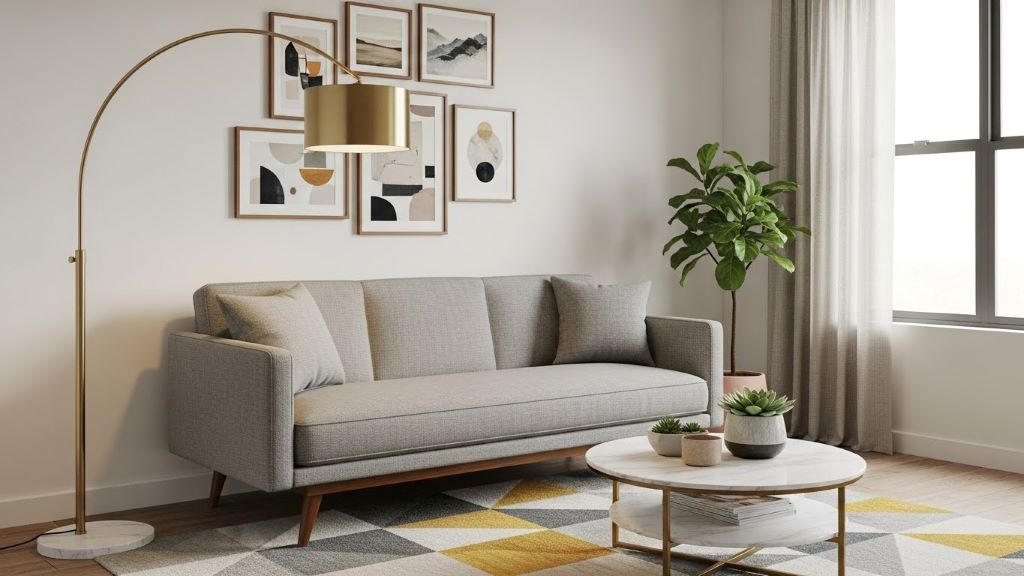
A sofa often serves as the focal point of any living room. For small spaces, look for models measuring between 72 and 78 inches in length. Mid century sofas typically feature low backs and narrow arms. These proportions prevent the piece from overwhelming the room.
Loveseats offer another excellent option. They provide comfortable seating for two people while consuming less floor space. Many mid century loveseats include wooden frames with cushioned seats. This combination delivers comfort without excess bulk.
Consider sofas with exposed wooden legs and frames. These elements add architectural interest while maintaining a light visual weight. Furthermore, choosing pieces upholstered in neutral colors helps create a cohesive look that won’t compete with other design elements.
Accent Chairs That Save Space
Accent chairs provide flexible seating without permanent commitment. Mid century designs often feature curved backs and angled legs. These shapes create visual interest while taking up minimal space.
Look for chairs that can easily move around the room. Lightweight construction makes rearranging furniture simple when you need to accommodate guests. Additionally, chairs with open arms or no arms at all consume less visual space than fully upholstered options.
Pair two accent chairs instead of using a traditional sofa. This arrangement can work beautifully in very small living rooms. It offers adequate seating while leaving more room for movement and other furniture pieces.
Smart Storage Solutions
Media Consoles and Sideboards
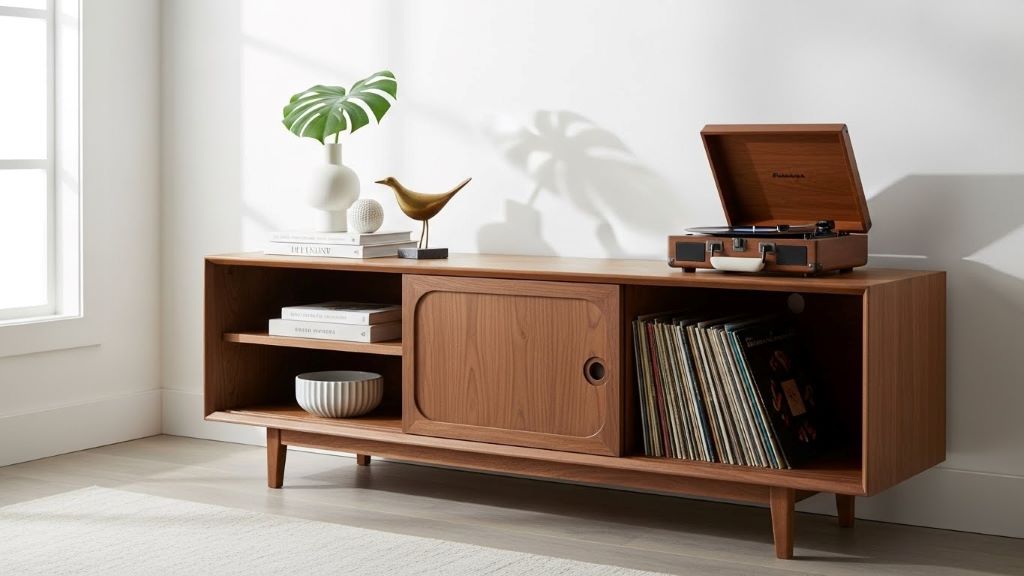
Storage becomes critical in small living rooms. Mid century media consoles solve this problem elegantly. These low-profile pieces typically feature sliding doors or tambour fronts. They hide electronics and clutter while providing display space on top.
According to Architectural Digest, mid century furniture remains popular because it combines “aesthetic appeal with practical functionality.” This combination proves especially valuable in compact spaces.
Look for consoles with tapered legs that lift the piece off the floor. This elevation creates breathing room and makes cleaning easier. Many designs also include open shelving alongside closed storage. This mix allows you to display decorative items while concealing less attractive necessities.
Bookcases and Shelving Units
Vertical storage maximizes space without consuming valuable floor area. Mid century bookcases often feature ladder-style designs or modular configurations. These options allow customization based on your specific needs.
Choose pieces with varying shelf depths. Shallow shelves work perfectly for books and decorative objects. Deeper sections can accommodate electronics or storage baskets. This flexibility ensures every inch serves a purpose.
Wall-mounted shelving represents another space-saving approach. Floating shelves maintain the mid century aesthetic while freeing up floor space entirely. They work particularly well in rooms where traditional bookcases would create a cramped feeling.
Tables for Every Function
Coffee Tables with Purpose
Coffee tables anchor seating arrangements and provide essential surface area. For small living rooms, select tables with slim profiles and open designs. Glass tops create visual transparency that helps rooms feel larger.
Many mid century coffee tables include lower shelves or built-in magazine racks. These features add storage without increasing the footprint. Additionally, nesting tables offer incredible flexibility. You can separate them when needed or tuck them together to save space.
Consider the height of your coffee table carefully. Lower profiles work better in small spaces because they don’t interrupt sight lines across the room. This consideration helps maintain an open, flowing atmosphere.
Versatile Side Tables
Side tables provide convenient surfaces for lamps, drinks, and personal items. Mid century designs often feature simple geometric shapes like circles, triangles, or hexagons. These interesting forms add personality without overwhelming the space.
Look for nesting side tables or models with built-in magazine racks. Some designs even include small drawers for remote controls and other small items. Therefore, these pieces contribute both style and function to your living room.
C-shaped side tables that slide under sofas offer another smart solution. They provide surface area exactly where you need it without consuming permanent floor space. This design works especially well in tight quarters.
Lighting Considerations
Floor Lamps That Enhance Space
Lighting dramatically affects how spacious a room feels. Mid century floor lamps typically feature slender poles with minimal bases. Arc lamps represent a particularly space-efficient option. They curve over seating areas, eliminating the need for side tables.
Tripod floor lamps offer another classic mid century choice. Their splayed legs create stability while maintaining an open, airy appearance. Additionally, adjustable designs let you direct light exactly where needed.
Choose lamps with dimmer switches when possible. This feature allows you to adjust lighting levels for different activities and times of day. Proper lighting control helps small rooms feel more comfortable and versatile.
Table Lamps and Accent Lighting
Table lamps provide focused task lighting and decorative interest. Mid century designs often incorporate geometric shapes, wooden elements, or ceramic bases. These details add visual warmth without cluttering surfaces.
Select lamps with proportions appropriate to your furniture scale. Oversized lamps can overwhelm small tables and make rooms feel cramped. Conversely, tiny lamps may not provide adequate illumination or visual impact.
According to The New York Times, proper lighting makes small spaces feel more inviting and functional. Layer different light sources to create depth and eliminate harsh shadows.
Material and Color Selection
Choosing the Right Wood Tones
Mid century modern furniture commonly features walnut, teak, or oak wood. These warm tones add richness without heaviness. However, lighter woods like ash or maple can make small spaces feel even more open and airy.
Consider how wood tones interact with your existing decor. Mixing different woods can work beautifully if they share similar undertones. Alternatively, staying within one wood family creates a cohesive, harmonious look.
The natural grain patterns in mid century pieces provide visual interest. This texture prevents rooms from feeling flat or boring. Therefore, even simple furniture designs deliver aesthetic complexity.
Upholstery Colors and Patterns
Neutral upholstery colors create flexibility for future design changes. Grays, beiges, and soft whites work well as foundation pieces. You can then add personality through pillows, throws, and artwork.
However, don’t fear bold colors in small spaces. A jewel-toned accent chair or vibrant sofa can actually energize a compact room. The key involves balancing statement pieces with quieter surrounding elements.
Patterns require careful consideration. Small-scale geometric prints align well with mid century aesthetics. Large, busy patterns may overwhelm tiny rooms. Therefore, reserve bold patterns for accent pieces rather than major furniture items.
Arrangement Tips for Maximum Impact
Creating Traffic Flow
Furniture placement dramatically affects how spacious a room feels. Leave at least 18 inches between furniture pieces for comfortable navigation. This spacing allows easy movement without creating a sparse, unfriendly atmosphere.
Float furniture away from walls when possible. This counterintuitive approach actually makes rooms feel larger by creating depth. Additionally, it allows you to use wall space for storage or decorative elements.
Consider diagonal furniture arrangements for square rooms. Angling pieces creates interesting sight lines and makes the space feel more dynamic. However, ensure this approach doesn’t block natural traffic patterns.
Balancing Scale and Proportion
Every piece in your living room should relate proportionally to the space and other furniture. Oversized items dominate small rooms and create imbalance. Conversely, furniture that’s too small can make a room feel disjointed and incomplete.
The classic mid century approach emphasizes horizontal lines and low profiles. This design philosophy helps small rooms feel wider rather than more cramped. Therefore, avoid tall, boxy furniture that draws the eye upward and emphasizes limited space.
Group furniture in odd numbers when possible. Three or five items create more visual interest than pairs. This principle applies to everything from accent pillows to decorative objects on shelves.
Budget-Friendly Options
Reproduction Furniture
Authentic vintage mid century pieces can command high prices. However, many manufacturers produce high-quality reproductions at accessible price points. These pieces capture the style and spirit of original designs without the collector’s premium.
Research companies specializing in mid century modern reproductions. Many offer excellent craftsmanship and authentic details at reasonable costs. Additionally, reproduction pieces often include modern improvements like stain-resistant fabrics or reinforced construction.
Mix reproductions with vintage pieces to create an authentic-feeling space on a budget. Most people cannot distinguish well-made reproductions from originals without close inspection. Therefore, you can achieve the look you want without overspending.
Shopping Secondhand
Thrift stores, estate sales, and online marketplaces offer treasure troves of mid century furniture. Original pieces often cost less than new reproductions when purchased secondhand. However, shopping this way requires patience and persistence.
Inspect used furniture carefully for structural integrity. Minor cosmetic issues like worn upholstery or finish damage can usually be addressed affordably. Focus on pieces with solid construction and good bones.
Consider reupholstering or refinishing pieces you find. This approach lets you customize furniture to your exact preferences while preserving authentic vintage construction. Additionally, restored pieces often become conversation starters and cherished focal points.
Conclusion
Mid century modern furniture excels in small living rooms through intelligent design and timeless style. The clean lines, functional approach, and space-saving features characteristic of this aesthetic transform compact areas into comfortable, stylish retreats. By selecting appropriately scaled pieces, maximizing storage, and arranging furniture thoughtfully, you can create a living space that feels both spacious and inviting.
Remember that successful small-space design balances aesthetics with practicality. Choose pieces that serve multiple functions whenever possible. Pay attention to proportions, traffic flow, and visual weight. Most importantly, select furniture you truly love, as these pieces will anchor your daily life.
Whether investing in authentic vintage finds or quality reproductions, mid century modern furniture offers lasting value. These designs have remained popular for decades because they solve real problems beautifully. Therefore, your small living room can achieve both the style and functionality you desire.
Frequently Asked Questions
What size sofa works best in a small living room?
A sofa measuring 72 to 78 inches in length typically works well in small living rooms. Consider loveseats or apartment-sized sofas if your space is particularly tight. Choose designs with low backs and narrow arms to maximize the feeling of openness.
Can you mix mid century modern furniture with other styles?
Yes, mid century modern furniture mixes beautifully with many design styles. The clean lines and simple forms serve as excellent foundation pieces. You can add contemporary, bohemian, or even traditional elements without creating visual chaos. The key involves maintaining balance and not overwhelming the space with competing styles.
How do I make a small living room feel larger with furniture?
Choose furniture with exposed legs that elevate pieces off the floor. Select items with slim profiles and avoid bulky, overstuffed designs. Use mirrors strategically to reflect light and create depth. Additionally, maintain consistent wood tones and neutral color palettes to create visual continuity.
Is mid century modern furniture comfortable?
Quality mid century modern furniture balances aesthetics with comfort. While some pieces prioritize form over function, many designs offer excellent support and cushioning. Test furniture in person when possible, or carefully review specifications and customer feedback when shopping online. Adding throw pillows can enhance comfort without compromising the clean aesthetic.
Where can I find affordable mid century modern furniture?
Explore online retailers specializing in reproductions, shop estate sales and thrift stores for vintage pieces, and check online marketplaces for both new and used options. Many mainstream furniture stores now offer mid century inspired collections at accessible price points. Additionally, consider DIY refinishing projects to transform dated pieces into mid century treasures.
Related Topics:
How Long Do Washers and Dryers Last? A Complete Lifespan Guide
How to Measure Cabinet Handles: A Complete Guide for Perfect Fit and Style