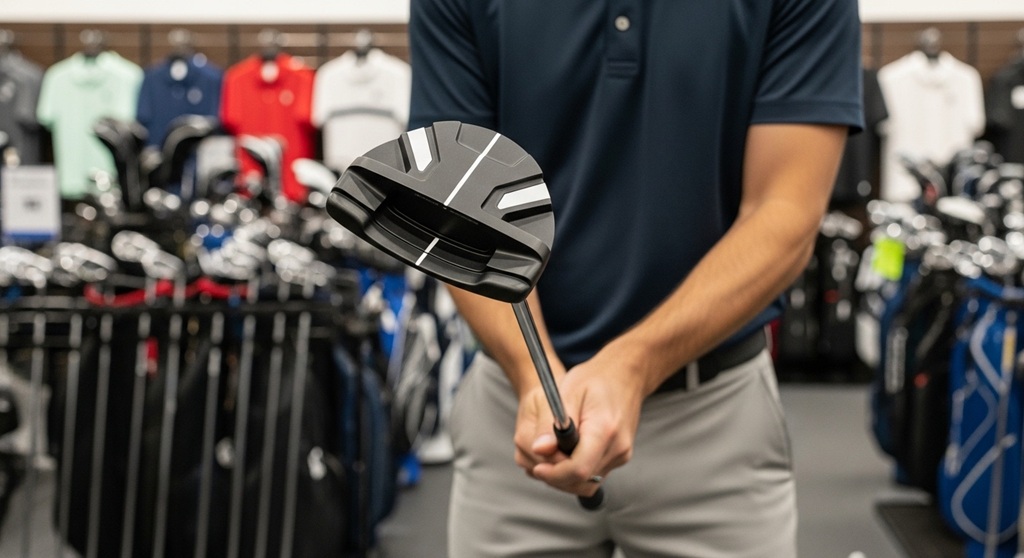
A golf putter might look simple compared to other clubs, but it plays a major role in your score. Studies show that nearly 40–45% of strokes in a typical round happen on the putting green. That means choosing the right putter is not just about preference — it directly affects performance.
Many golfers buy a putter based on brand reputation, appearance, or recommendations. However, professional fitters and instructors strongly advise a different approach: always test a golf putter before buying. This process helps you evaluate balance, alignment, feel, and stroke compatibility.
A structured putter fitting guide can help golfers identify which model improves accuracy and distance control. Retail stores and fitting centers often provide practice greens, alignment tools, and swing analysis systems to assist buyers. Following simple golf store fitting tips ensures that the putter matches your natural stroke rather than forcing you to adjust your technique.
This guide explains how to properly try before buying, what to look for during testing, and how professional fittings work. By the end, you will know exactly how to evaluate a putter so you can make a confident purchase decision.
Why Should You Test a Golf Putter Before Buying?
Short answer: Testing a golf putter ensures it matches your stroke, improves alignment, and provides consistent distance control.
Many golfers assume that all putters perform similarly. In reality, design differences such as head shape, balance, shaft length, and grip size significantly affect performance.
The Problem
Golfers frequently purchase putters based on looks or brand popularity. Without testing, they may end up with equipment that conflicts with their natural stroke.
The Agitation
Using the wrong putter can lead to:
- Poor alignment at address
- Inconsistent distance control
- Frequent three-putts
- Reduced confidence on the green
The Solution
Testing putters before buying allows you to compare different models and determine which one supports your natural stroke mechanics.
According to data published by Golf Datatech, golfers who undergo a professional club fitting report 20–30% improvement in putting consistency compared to those using off-the-rack clubs.
Where Can You Test Golf Putters Before Buying?
Short answer: The best places to test putters are golf retail stores, pro shops, and professional club fitting studios.
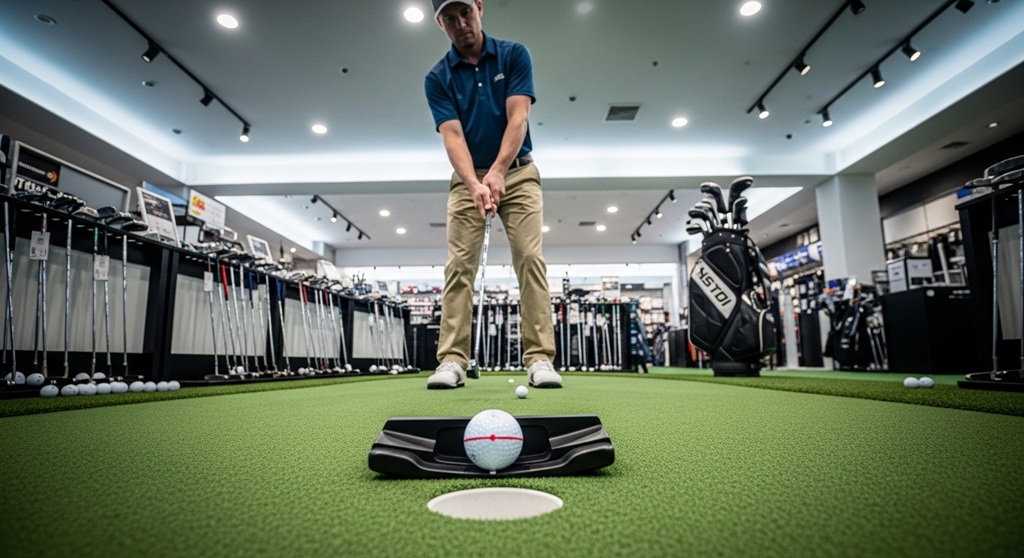
Modern golf stores provide testing environments designed to simulate real putting conditions.
Common Locations for Putter Testing
- Golf retail stores with indoor putting greens
- Golf course pro shops
- Professional club fitting studios
- Golf demo days or brand events
Golf Store Fitting Tips
When visiting a store, use these tips to maximize the experience:
- Bring your golf shoes to replicate real posture
- Test at least 5–6 different putter models
- Focus on alignment rather than distance initially
- Use the store’s alignment lines and targets
Many stores now use launch monitor technology such as SAM PuttLab or Quintic Ball Roll. These systems track:
- Face angle at impact
- Stroke path
- Ball launch direction
- Skid and roll efficiency
These metrics help identify which putter design suits your stroke style.
What Should You Look for When Testing a Golf Putter?
Short answer: Focus on alignment, balance, feel, distance control, and stroke compatibility.
A proper putter fitting guide evaluates multiple factors rather than relying on a single test.
Key Performance Factors
| Factor | What to Check | Why It Matters |
|---|---|---|
| Alignment | Does the putter help you aim naturally? | Improves accuracy on short putts |
| Balance | Face-balanced or toe-hang design | Matches stroke arc |
| Feel | Impact feedback and sound | Helps control speed |
| Distance Control | Consistency on longer putts | Reduces three-putts |
| Grip Comfort | Grip size and texture | Stabilizes stroke |
Testing these elements ensures the putter complements your natural putting mechanics.
How Do You Perform a Basic Putter Fitting Test in a Store?
Short answer: Start with short putts, evaluate alignment, test different head shapes, and compare distance control.
Step 1: Begin With Short Putts
Start from 3–6 feet. This distance focuses on alignment and face control rather than power.
Step 2: Test Different Head Shapes
- Blade putters
- Mallet putters
- High-MOI designs
Each style affects stability and forgiveness differently.
Step 3: Evaluate Alignment
Choose a putter that naturally frames the ball and target line without forcing adjustments.
Step 4: Test Distance Control
Move back to 20–30 feet and evaluate how consistently you control speed.
Step 5: Compare Results
After testing several models, narrow your choices to the two most comfortable options and repeat the process.
How Does Professional Putter Fitting Work?
Short answer: Professional putter fitting uses motion tracking technology to analyze stroke mechanics and recommend a suitable putter.
Professional fitting services provide deeper analysis compared to basic store testing.
Typical Putter Fitting Process
- Stroke analysis using motion sensors
- Measurement of shaft length and lie angle
- Head design evaluation
- Grip size recommendations
Case Study: Club Fitting Results
A study conducted by True Spec Golf evaluated amateur golfers who received professional putter fittings. The results showed:
- Average reduction of 2–3 putts per round
- Improved face alignment by 1.5 degrees
- Better roll consistency on putts longer than 15 feet
These results demonstrate how equipment optimization can improve performance without changing technique.
How Many Putters Should You Try Before Buying?
Short answer: Test at least five to ten putters to identify the best match for your stroke.
Trying multiple options provides perspective on design differences.
Recommended Testing Strategy
- 3 blade putters
- 3 mallet putters
- 2 high-MOI models
This comparison helps determine which category produces the most consistent results.
What Are Common Mistakes When Testing Putters?
Short answer: Common mistakes include rushing the process, focusing on appearance, and ignoring stroke compatibility.
Frequent Buying Mistakes
- Choosing based only on brand reputation
- Testing only one putter model
- Ignoring shaft length
- Overlooking grip comfort
- Not testing long putts
Avoiding these mistakes ensures a more reliable purchase decision.
How Long Should You Test a Putter Before Buying?
Short answer: Spend at least 20–30 minutes testing multiple putters to evaluate performance across different distances.
A rushed decision often leads to poor results. Spend enough time testing:
- Short putts (3–6 feet)
- Mid-range putts (10–15 feet)
- Long putts (20–30 feet)
Testing across these distances reveals how the putter performs in realistic playing situations.
Conclusion: The Smart Way to Choose a Golf Putter
Buying a golf putter without testing it first is similar to purchasing shoes without trying them on. Every golfer has a unique putting stroke, posture, and alignment preference. A putter that works well for one player may feel uncomfortable or inconsistent for another.
Following a structured putter fitting guide helps you evaluate the most important factors: alignment, balance, feel, and distance control. Golf store testing areas and professional fitting studios provide the environment needed to compare models accurately.
Remember the key principle: always try before buying. Spend time testing multiple putters, analyze how each one performs, and choose the option that feels natural during your stroke.
If you want to improve your performance on the greens, start by visiting a golf store or fitting center and test several putters today. The right putter can reduce unnecessary strokes and increase confidence during every round.
FAQ: Testing a Golf Putter Before Buying
1. Can beginners benefit from testing putters before buying?
Yes. Beginners often struggle with alignment and distance control. Testing multiple putters helps identify designs that improve consistency and comfort.
2. What type of putter is best for beginners?
Many beginners prefer mallet putters because they provide higher stability and forgiveness. However, the best choice depends on individual stroke mechanics.
3. Is professional putter fitting worth it?
Professional fitting can be valuable, especially for golfers seeking performance improvements. Motion tracking technology helps identify stroke patterns and equipment compatibility.
4. How much does a professional putter fitting cost?
Professional fittings typically range from $50 to $150 depending on the facility and technology used.
5. How do I know if a putter fits my stroke?
A suitable putter helps you align naturally, produces consistent ball roll, and feels balanced during the stroke.
6. Should I test putters indoors or outdoors?
Indoor practice greens provide controlled conditions, while outdoor greens simulate real playing surfaces. Ideally, try both environments before buying.
7. How often should golfers replace their putter?
Putters can last many years if they remain comfortable and consistent. Replacement is usually necessary when performance declines or stroke mechanics change.
Read More Also: Memory Foam vs Regular Dog Beds: Which One Is Better?
Find out: How to Read Kitchen Stand Mixer Reviews Before Buying